
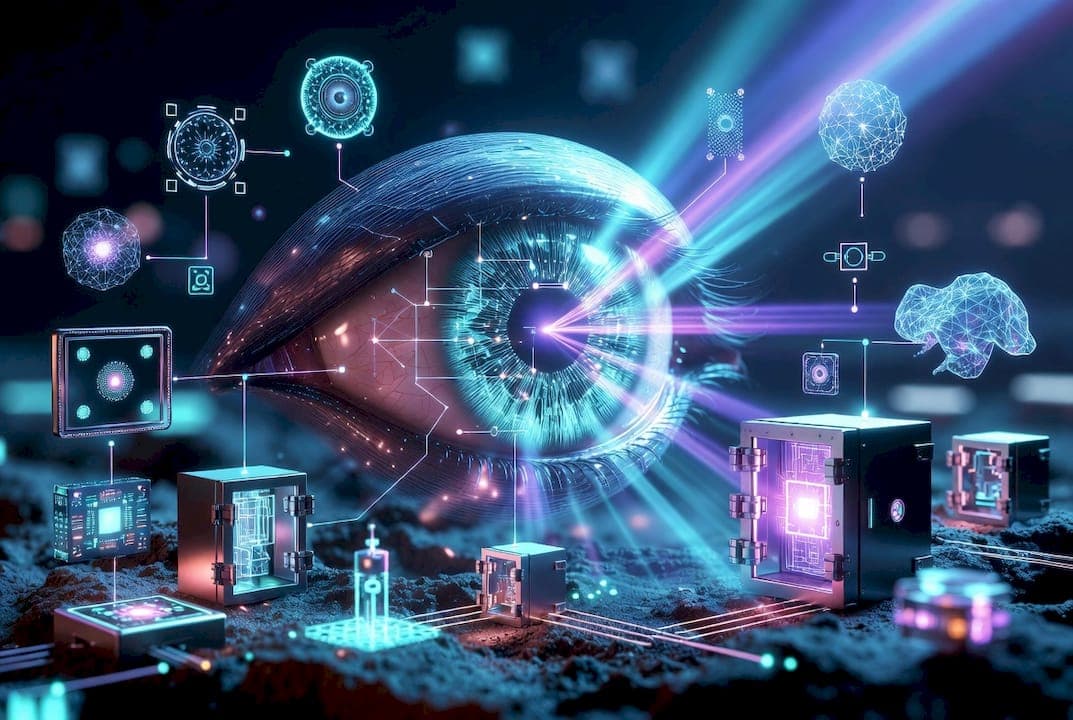
TL;DR:
- The biometric security industry is undergoing a fundamental transformation driven by rapid market growth and evolving threats. Organizations must implement high-security sensors, validated anti-spoofing measures, and comply with complex privacy laws to mitigate risks. Future advancements focus on continuous authentication, privacy-by-design, and cryptographic integration to enhance security while maintaining user convenience.
The biometric security industry landscape is not the mature, stable sector many security strategists assume it to be. The global biometric system market is projected to reach $183 billion by 2030, expanding from $49 billion in 2025 at a CAGR that exceeds 22% in next-generation authentication segments. That rate of expansion signals something more significant than incremental improvement. It reflects a fundamental restructuring of how identity is verified, how biometric data is protected, and how organizations must now think about regulatory exposure, spoofing resistance, and architectural design. This article maps the terrain for professionals who need more than a surface-level overview.
Table of Contents
-
The biometric security industry landscape: technologies and market segmentation
-
How Jett Optics addresses the modern biometric security challenge
Key takeaways
| Point | Details |
|---|---|
| Market growth is accelerating | The biometric market is on track to triple in five years, driven by identity verification and next-gen authentication demand. |
| Sensor class determines security tier | Only Class 3 biometric sensors meet the thresholds required for financial payments and cryptographic key protection. |
| Anti-spoofing certification matters | iBeta Level 2 certification under ISO/IEC 30107-3 is the credible benchmark for high-security biometric deployments. |
| BIPA compliance carries litigation risk | Illinois BIPA imposes up to $5,000 per violation with no requirement to prove actual harm, creating substantial class-action exposure. |
| Continuous authentication is the new standard | Zero Trust architectures are shifting the industry toward behavioral biometrics that verify identity throughout a session, not just at login. |
The biometric security industry landscape: technologies and market segmentation
The biometric authentication technologies currently deployed span five primary modalities, each with distinct security profiles, deployment costs, and resistance to spoofing. Understanding where each modality sits in the market is a prerequisite for any serious technology assessment.
Fingerprint recognition remains the highest-volume modality by deployment count, driven by smartphone integration and access control systems. Facial recognition has expanded rapidly into border control, financial services, and consumer devices. Iris recognition occupies the high-assurance tier, used in government identity programs and high-security facilities. Voice biometrics dominates contact center authentication and remote identity verification. Behavioral biometrics, the youngest of the five, monitors patterns like typing cadence, mouse movement, and gait to provide continuous session-level authentication.
| Modality | Primary applications | Security tier | Spoofing resistance |
|---|---|---|---|
| Fingerprint | Mobile payments, access control | Medium to High | Moderate (Class 3 sensors required) |
| Facial recognition | Border control, consumer devices | Medium to High | Moderate (IR-depth cameras required) |
| Iris | Government ID, high-security facilities | Very High | High |
| Voice | Contact centers, remote verification | Medium | Lower (vulnerable to synthesis attacks) |
| Behavioral | Zero Trust, fraud detection | High (continuous) | High (hard to replicate) |
Mobile biometric sensor classification is a dimension that many deployments underweight. Only Class 3 sensors meet the stringent requirements for financial payments and cryptographic key protection, with a spoof acceptance rate below 7% and a false acceptance rate below 0.002%. Class 3 includes ultrasonic fingerprint scanners and IR-depth facial cameras. Class 1 and Class 2 sensors, which cover most optical fingerprint readers and standard front cameras, are inadequate for high-assurance use cases despite their widespread deployment.
The AI-powered analytics segment is accelerating cross-sector adoption, particularly in workforce identity management and behavioral monitoring applications that combine biometric signals with contextual data for richer authentication decisions.

Evolving threats and anti-spoofing measures
The threat model for biometric systems has grown considerably more complex. Two categories of attack now define the adversarial landscape: presentation attacks and injection attacks. Presentation attacks involve physical artifacts placed in front of a sensor, including photographs, 3D-printed masks, and silicone overlays. Injection attacks are more technically demanding and more dangerous. They bypass the sensor entirely, inserting synthetic biometric data directly into the data stream between the sensor and the processing layer.
Emerging threats that security architects must account for include:
-
Deepfake video injection, where AI-generated face streams replace live camera feeds at the software interface level
-
3D silicone masks, which can defeat standard 2D liveness detection by replicating skin texture and micro-movements
-
Fingerprint overlays made from gelatin or latex that replicate enrolled fingerprint patterns with high fidelity
-
Voice synthesis attacks, where neural text-to-speech models generate speaker-matched audio to defeat voice authentication
Presentation attack detection (PAD) technologies must comply with ISO/IEC 30107-3 and achieve iBeta Level 2 certification for high-security applications. Level 1 certification tests resistance to low-effort attacks such as printed photos and basic replay videos. Level 2 raises the bar significantly, requiring demonstrated resistance to sophisticated 3D masks and latex overlays. For government and financial authentication contexts, Level 2 is the only credible benchmark.
When evaluating vendors, APCER and BPCER metrics provide more meaningful performance data than generic accuracy claims. APCER (Attack Presentation Classification Error Rate) measures how often an attack is incorrectly accepted; BPCER (Bona Fide Presentation Classification Error Rate) measures how often a legitimate user is incorrectly rejected. Both must be reported together to give a complete picture of system performance.
Injection attacks require multi-layered defenses: sensor-level hardware attestation, cryptographic signing of biometric frames at the point of capture, and AI-based artifact detection that identifies statistical anomalies in synthetic data streams. Securing only the liveness detection layer while leaving the sensor stream unprotected creates a gap that sophisticated adversaries will exploit.
Pro Tip: When procuring a biometric system for financial or government use, require vendors to provide iBeta Level 2 test reports with APCER and BPCER values, not just overall accuracy figures. A system with 99.5% accuracy can still fail catastrophically against targeted spoofing if the APCER is not independently validated.
Regulatory compliance and biometric privacy law
The regulatory environment surrounding biometric data has become one of the most significant operational risks in biometric system deployment. Organizations that treat compliance as an afterthought are accumulating liability with every biometric scan they process.
The major legislative frameworks currently in force in the United States include:
-
Illinois BIPA (Biometric Information Privacy Act): The most litigated biometric privacy law in the country, with a private right of action and no requirement to prove actual harm
-
Texas CUBI (Capture or Use of Biometric Identifier Act): Enforced by the state attorney general, with penalties up to $25,000 per intentional violation
-
Washington My Health MY Data Act: Expanded protections covering biometric data collected in health contexts
-
California CCPA/CPRA: Classifies biometric data as sensitive personal information with opt-out rights and enhanced disclosure requirements
-
New York SHIELD Act: Requires reasonable safeguards for biometric data as part of broader private information protections
Illinois BIPA deserves specific attention because of its litigation mechanics. BIPA requires destruction of biometric data within three years of last interaction or once the initial collection purpose is satisfied. Statutory penalties range from $1,000 to $5,000 per violation, and because no actual harm must be demonstrated to file suit, class-action exposure scales directly with the frequency of biometric scans per individual. A workforce of 500 employees scanned daily for time-and-attendance purposes can generate tens of millions of dollars in theoretical liability within months of a compliance failure.
Courts have increasingly ruled that companies like Meta and Google have settled for hundreds of millions of dollars in biometric data mishandling cases, reinforcing that this is not a theoretical risk. Under BIPA, implied or verbal consent is insufficient. Standalone written releases are mandatory, and consent must be obtained before the first biometric capture, not retroactively.
Pro Tip: Integrate legal counsel into biometric system design from the architecture phase, not the deployment phase. Retrofitting consent workflows, data retention controls, and deletion pipelines into a live system is significantly more expensive and error-prone than building them in from the start.
Trends shaping the future of biometric security
The future of biometric security is being defined by three converging forces: the shift to continuous authentication, the adoption of privacy-by-design principles, and the integration of AI for both threat detection and system optimization.
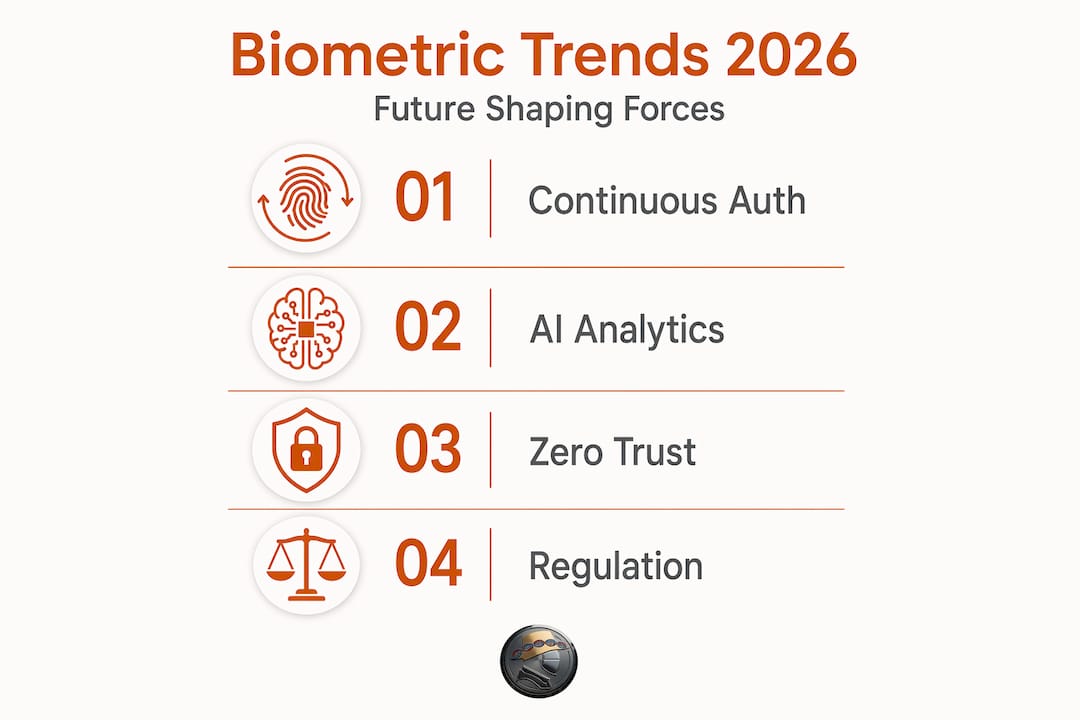
The move from one-time authentication to continuous behavioral biometrics within Zero Trust architectures represents the most structurally significant shift in the industry. Rather than verifying identity once at session initiation, continuous authentication monitors typing rhythm, gait, device orientation, and interaction patterns throughout a session. This approach addresses the fundamental weakness of point-in-time verification: a legitimate user who authenticates and then hands a device to an attacker is indistinguishable from the original user under traditional models.
Privacy-by-design and federated learning are becoming architectural standards rather than optional enhancements. On-device AI training allows biometric models to improve without transmitting raw biometric data to centralized servers, reducing both the attack surface and the regulatory exposure associated with data centralization. This approach aligns directly with GDPR and CCPA requirements while enabling the model accuracy improvements that high-assurance applications demand.
Additional trends shaping the industry include:
-
AI-driven synthetic attack detection, where models trained on known deepfake and injection attack patterns identify anomalies in biometric streams before they reach the matching layer
-
Decentralized identity frameworks, where biometric credentials are stored on-chain or in user-controlled wallets rather than in vendor-controlled databases
-
Standardization acceleration, with ISO/IEC 30107 and NIST biometric standards being adopted as procurement requirements by government agencies and financial institutions
Balancing user experience against security depth remains the central deployment challenge. Systems that impose friction at every authentication point see adoption resistance that undermines the security posture they were designed to create. The most effective deployments make high-assurance authentication ambient, continuous, and largely invisible to the end user.
My perspective on deploying biometric systems in practice
I’ve spent considerable time analyzing biometric deployments across financial services, government identity programs, and enterprise access control, and the gap between vendor claims and operational reality is wider than most procurement teams expect.
The hype around biometric accuracy rates is particularly misleading. A 99.9% accuracy figure sounds authoritative until you understand that it was measured in a controlled lab environment with cooperative subjects, consistent lighting, and no adversarial inputs. Real-world deployments face aging biometric templates, environmental variability, and increasingly sophisticated spoofing attempts that lab benchmarks simply do not capture. When I look at biometric encryption patents and vendor technical disclosures, the organizations doing serious work are the ones publishing APCER and BPCER data, not just top-line accuracy numbers.
The legal landscape is also reshaping strategic risk calculus in ways that many security teams are not adequately weighing. BIPA litigation has moved from a compliance footnote to a board-level financial risk. I’ve seen organizations deploy biometric time-and-attendance systems without standalone written consent workflows and then face class-action exposure that dwarfs the cost of the system itself.
What I find genuinely promising is the convergence of optical encryption and spatial authentication with biometric inputs. Using gaze patterns and attention vectors as cryptographic primitives, rather than simply as identity signals, represents a fundamentally different threat model. It makes the biometric input itself part of the encryption key, which changes the attack surface in ways that traditional PAD approaches cannot address.
The professionals who will navigate this field most effectively are those who treat biometric security as a system architecture problem, not a product selection problem.
— Joshua
How Jett Optics addresses the modern biometric security challenge
The threats and regulatory pressures described throughout this article point toward a clear architectural requirement: biometric systems must move beyond sensor-level liveness detection and toward cryptographic integration of biometric inputs at the system design level.
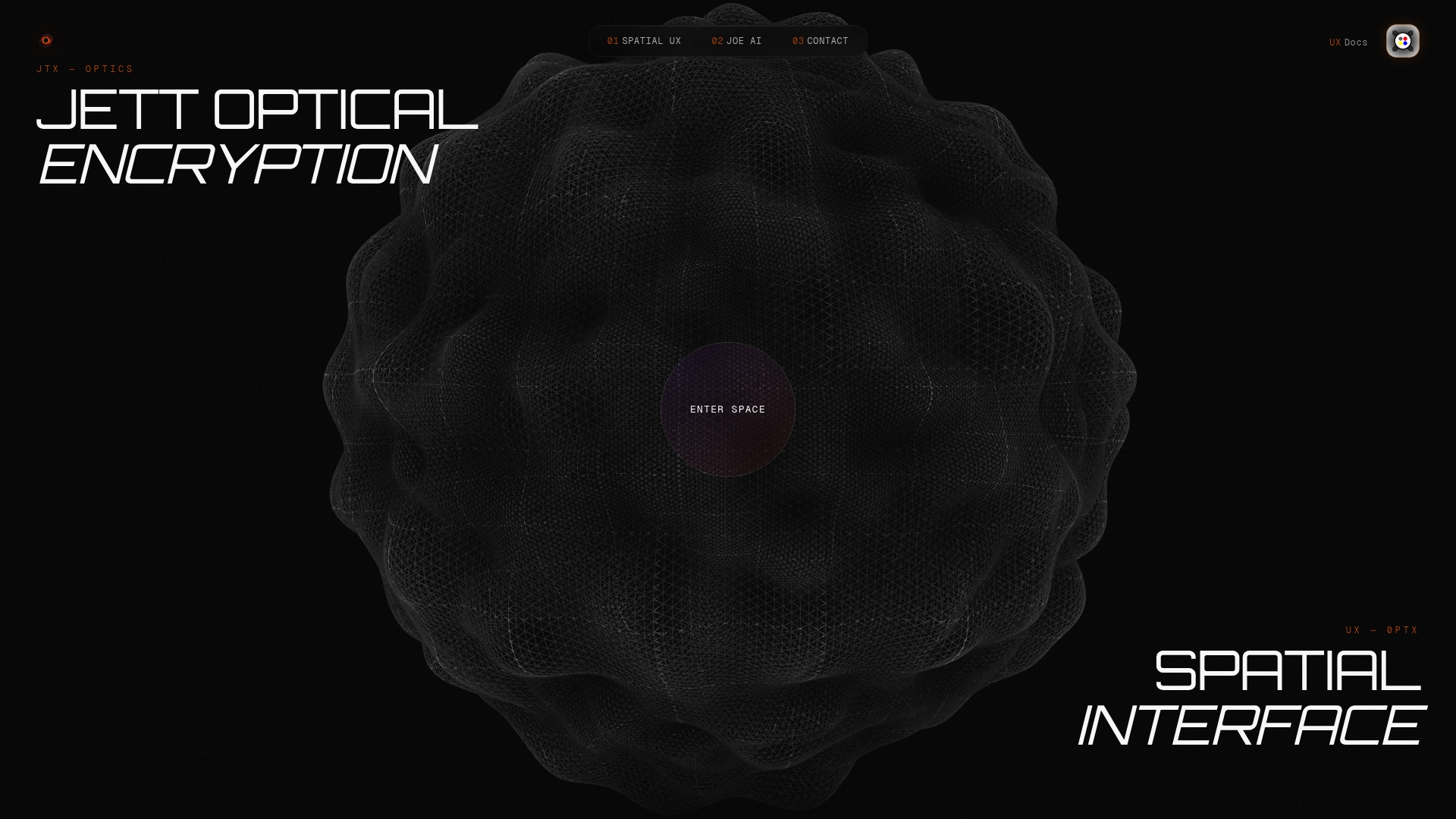
Jett Optics has built its platform around exactly this principle. By treating human gaze and attention as cryptographic keys through Agentive Gaze Tensor (AGT) technology, Jett Optics addresses the injection attack problem at its root. A synthetic biometric stream cannot replicate the spatial and temporal properties of a live gaze tensor, which means the attack surface that deepfakes and injection attacks exploit is structurally eliminated. The spatial encryption platform integrates quantum-resistant encryption with DePIN-compatible on-chain identity frameworks, providing compliance-aligned, decentralized biometric authentication for organizations that need to meet both security and regulatory requirements. For teams ready to move beyond conventional biometric architectures, Jett Optics offers a technically rigorous path forward.
FAQ
What is driving biometric market growth in 2026?
The biometric market is expanding at a CAGR between 14.9% and 22.2%, driven by demand in identity verification, financial authentication, and government identity programs. AI integration and Zero Trust adoption are accelerating deployment across sectors.
How secure is biometric data against spoofing attacks?
Security depends heavily on sensor class and anti-spoofing certification. Only Class 3 sensors with iBeta Level 2 certification under ISO/IEC 30107-3 provide adequate resistance to sophisticated attacks including 3D masks and AI-generated deepfake injection.
What are the advantages of biometric technology over passwords?
Biometric authentication eliminates credential sharing, phishing vulnerability, and password reuse risks. Continuous behavioral biometrics also provide session-level identity assurance that static credentials cannot match.
What does BIPA compliance require for biometric systems?
Illinois BIPA requires standalone written consent before collection, a published data retention policy, and destruction of biometric data within three years of last interaction. Violations carry statutory penalties of $1,000 to $5,000 per incident with no requirement to prove actual harm.
What is the impact of biometric systems on Zero Trust architectures?
Continuous behavioral biometrics integrate directly into Zero Trust models by providing ongoing identity assurance rather than point-in-time verification, monitoring signals like typing rhythm and device movement to detect session takeover attempts in real time.