

TL;DR:
- The AI biometric convergence market integrates artificial intelligence with multimodal biometric technologies to enable continuous, secure identity verification. Market growth is driven by increasing demand for fraud prevention, government ID programs, and expanding applications across industries. Organizations should prioritize orchestration infrastructure over sensor selection to adapt to evolving modalities and maintain security and operational resilience.
The AI biometric convergence market is defined as the integration of artificial intelligence with multimodal biometric technologies to deliver continuous, adaptive, and highly secure identity verification across physical and digital environments. This sector, formally recognized in identity security research as multimodal AI-driven biometric authentication, is no longer an emerging concept. The digital identity market is projected to grow from $44.2B in 2025 to $132.1B by 2031 at a 20% CAGR, with AI-powered biometric systems serving as the primary growth engine. Key players including Aware, the FIDO Alliance, and enterprise platform vendors are accelerating adoption across banking, healthcare, and government sectors. The convergence of AI and biometrics represents a structural shift in how organizations authenticate identity, moving from static, single-modal checks to dynamic, real-time confidence scoring across multiple biometric signals simultaneously.
What technological innovations are driving the AI biometric convergence market?
The foundational shift in biometric technology trends is the transition from rigid, single-purpose sensors to flexible, multifunctional sensing architectures capable of capturing dynamic biometric signals in real time. Four key transformations define this shift: rigid to flexible sensors, static to dynamic signal capture, manual to automatic feature representation, and single-function to multifunctional devices. Each transformation compounds the others, creating systems that are simultaneously more accurate, more deployable, and harder to spoof.

At the AI architecture level, transformer-based models have displaced convolutional neural networks (CNNs) as the preferred approach for biometric feature extraction. Vision Transformer (ViT) and Swin Transformer models outperform CNNs in iris and fingerprint recognition by modeling global spatial relationships rather than local feature patches. This matters because occlusions, deformities, and environmental variation that defeat CNN-based systems are handled with greater robustness when the model understands the full spatial context of a biometric input.
Multimodal fusion is where AI in biometrics delivers its most measurable security gains. The critical design choice is whether to fuse at the feature level, the score level, or the decision level:
-
Feature-level fusion combines raw biometric representations before classification, yielding the highest accuracy but requiring precise data alignment across modalities.
-
Score-level fusion aggregates match scores from independent classifiers, offering a practical balance between accuracy and implementation complexity.
-
Decision-level fusion applies majority voting or weighted logic across independent decisions, the simplest approach but the least accurate.
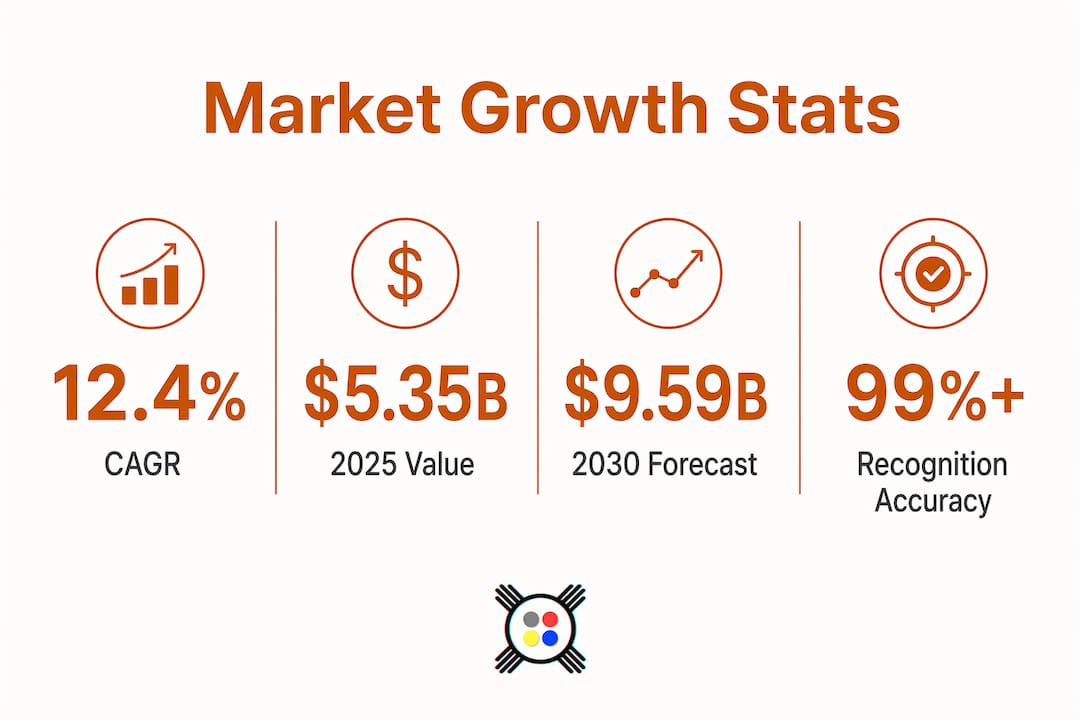
Integration of iris, facial, and finger vein features via deep learning achieves recognition accuracy exceeding 99%, a threshold that single-modal systems cannot reliably reach. Emerging modalities including ECG biometrics, palm vein, and periocular recognition are entering production deployments, expanding the signal surface available for continuous authentication.
Anti-spoofing and liveness detection are non-negotiable components of any production-grade system. Presentation attack detection (PAD) using 3D depth sensing, thermal imaging, and micro-expression analysis now operates at the hardware layer, not just the software layer. This architectural decision prevents replay attacks and synthetic media injection before signals reach the AI classification pipeline.
Pro Tip: When evaluating AI biometric platforms, require vendors to demonstrate PAD performance under ISO/IEC 30107-3 compliance. Liveness detection that passes only controlled lab conditions will fail in real-world deployment environments with variable lighting, motion, and sensor wear.
How is market growth shaping the AI biometric convergence landscape?
The multimodal biometric devices market is forecast to grow from $5.35B in 2025 to $9.59B in 2030 at a CAGR of 12.4%. That growth rate reflects sustained institutional demand, not speculative adoption. The implication for decision-makers is that capital allocation toward biometric infrastructure now carries a defensible ROI horizon across a five-year planning cycle.
| Segment | 2025 Value | 2030 Forecast | CAGR |
|---|---|---|---|
| Multimodal biometric devices | $5.35B | $9.59B | 12.4% |
| Digital identity solutions | $44.2B | $132.1B | 20.0% |
Four demand drivers are pulling this market forward with structural force. Identity theft prevention is the most immediate, as AI-generated synthetic identities have outpaced the detection capability of legacy single-modal systems. Government national ID programs in the EU, India (Aadhaar), and the United States are mandating multimodal enrollment at scale. Healthcare organizations are deploying biometric authentication to satisfy HIPAA access controls while reducing friction for clinical staff. The BFSI sector is integrating biometric authentication into transaction authorization workflows, replacing knowledge-based authentication that is trivially defeated by social engineering.
Biometric terminal adoption is accelerating in physical access control, driven by the convergence of logical and physical identity systems. Organizations that previously managed separate credentialing systems for building access and network access are consolidating onto unified biometric platforms. This consolidation creates demand for integration services, enrollment infrastructure, and cloud AI processing capacity. The biometric security industry in 2026 reflects this consolidation trend across enterprise and government verticals.
Cloud-native AI platforms are enabling biometric processing at a scale that on-premise hardware cannot match. Real-time fraud detection, continuous model retraining on new attack patterns, and federated identity management across distributed sites all require cloud AI infrastructure. Organizations that treat biometric authentication as a hardware procurement decision rather than a software platform decision will find themselves architecturally constrained within 18 to 24 months.
What are the practical challenges of integrating AI biometric systems?
The most significant operational challenge in the AI biometric convergence market is not technology selection. It is managing fragmented multi-vendor biometric environments that have accumulated through years of siloed procurement decisions. 98% of organizations report interest in biometric orchestration to address this fragmentation, a figure that signals near-universal recognition of the problem. Biometric orchestration platforms integrate and coordinate multiple biometric workflows, normalizing outputs from disparate vendors into a single identity decision layer.
Practical integration considerations for decision-makers include:
-
Drop-in vs. full replacement: Drop-in biometric devices that sit between existing badge readers and access control panels deploy within hours, preserve existing infrastructure investment, and support phased rollouts across multiple sites. Full system replacements offer cleaner architecture but carry 6 to 12 month deployment timelines and significant change management overhead.
-
Sensor degradation management: Fingerprint sensors accumulate contamination, iris cameras drift in calibration, and facial recognition accuracy degrades under changing ambient lighting. Quality-aware fusion systems that dynamically weight sensor inputs based on real-time confidence scores are required for production reliability.
-
Tailgating and physical security gaps: Biometric authentication at a door does not prevent a second person from entering behind an authenticated user. Depth sensors, weight-based floor detection, and mantrap configurations address this at the physical layer.
-
Privacy and compliance architecture: GDPR, CCPA, and sector-specific regulations require biometric data to be processed with explicit consent frameworks, data minimization, and breach notification protocols. Privacy-by-design must be a procurement criterion, not an afterthought.
AI-powered orchestration becomes the operational backbone for organizations managing identity system complexity at scale. The orchestration layer translates raw biometric signals from multiple vendors into a unified confidence score, enabling consistent policy enforcement regardless of which sensor captured the input.
Pro Tip: Pilot drop-in biometric solutions on a single high-traffic access point before committing to site-wide deployment. This surfaces sensor calibration issues, user enrollment edge cases, and integration conflicts with your access control panel vendor in a controlled environment where remediation is fast.
How does AI biometric convergence compare to traditional biometric systems?
Traditional single-modal biometric systems operate on a binary authentication model: a fingerprint either matches or it does not. This architecture has three structural weaknesses. First, a single compromised or degraded biometric signal causes authentication failure with no fallback. Second, static enrollment templates do not adapt to natural biometric drift caused by aging, injury, or environmental factors. Third, single-modal systems present a concentrated attack surface where a single spoofing technique defeats the entire authentication layer.
AI-enabled multimodal systems address each of these weaknesses through continuous, confidence-weighted authentication:
-
Continuous authentication replaces the single point-of-entry check with ongoing behavioral and physiological monitoring throughout a session. Gaze patterns, keystroke dynamics, and voice characteristics are sampled continuously, detecting anomalies that indicate session hijacking or credential sharing.
-
Dynamic confidence management adjusts authentication thresholds in real time based on environmental conditions, risk context, and signal quality. A user authenticating from an unfamiliar location under poor lighting receives a higher-friction challenge than the same user at their registered workstation.
-
Anti-spoofing at the fusion layer means that defeating one modality does not defeat the system. A synthetic fingerprint that passes the fingerprint sensor still fails when iris and behavioral signals do not corroborate the claimed identity.
-
Frictionless user experience emerges as a byproduct of accuracy. When false rejection rates drop below operationally significant thresholds, users stop experiencing authentication as an obstacle. The FIDO Alliance’s passkey framework, combined with biometric authentication, demonstrates this principle at consumer scale.
The measurable security gain is significant. Feature-level multimodal fusion achieves recognition accuracy exceeding 99%, compared to fingerprint-only systems that operate in the 95 to 98% range under real-world conditions. For high-volume access control environments processing thousands of authentications daily, that accuracy delta translates directly into reduced false acceptance events and lower fraud exposure. Decision-makers evaluating biometric tech for competitive advantage should treat this accuracy gap as a primary selection criterion.
Key takeaways
The AI biometric convergence market is defined by the shift from static, single-modal authentication to continuous, AI-driven multimodal identity verification, and organizations that deploy orchestration-first architectures will capture the security and operational advantages this shift enables.
| Point | Details |
|---|---|
| Market growth is structural | Multimodal biometric devices grow at 12.4% CAGR to $9.59B by 2030, driven by identity theft, government programs, and BFSI demand. |
| Transformer models lead AI fusion | ViT and Swin Transformer architectures outperform CNNs in iris and fingerprint recognition by modeling global spatial relationships. |
| Orchestration solves fragmentation | 98% of organizations want biometric orchestration to unify multi-vendor environments and maintain accuracy under AI-driven fraud pressure. |
| Drop-in deployment accelerates adoption | Drop-in biometric devices deploy within hours, preserve existing infrastructure, and support phased site scaling without full system replacement. |
| Multimodal accuracy exceeds 99% | Feature-level fusion of iris, facial, and finger vein data via deep learning surpasses the accuracy ceiling of any single-modal system. |
Why orchestration strategy matters more than sensor selection
The instinct in this market is to lead with hardware. Which sensor vendor has the best iris camera? Which fingerprint module has the lowest false acceptance rate? These are valid questions, but they are the wrong starting point. After working through the architecture of dozens of biometric deployments, the pattern is clear: organizations that invest in orchestration infrastructure first and sensor selection second consistently outperform those that do the reverse.
The reason is straightforward. Sensors degrade, vendors get acquired, and attack patterns evolve faster than any single hardware platform can adapt. An orchestration layer that normalizes inputs from multiple vendors gives you the flexibility to swap sensors without rebuilding your identity decision logic. It also gives you the data surface to detect anomalies that no individual sensor can see in isolation.
The privacy dimension deserves equal weight. Biometric data is irreplaceable. A compromised password gets reset. A compromised fingerprint template does not. Organizations that treat biometric encryption as a compliance checkbox rather than a core architectural requirement are building on a foundation that one breach will permanently compromise. The future of biometric convergence belongs to systems that treat the biometric signal itself as a cryptographic primitive, not just an authentication input.
The emerging modalities on the horizon, including gaze dynamics, vascular mapping, and continuous behavioral biometrics, will further expand the signal surface available for continuous authentication. Organizations that build flexible, modality-agnostic orchestration architectures today will integrate these signals without architectural disruption. Those locked into single-vendor, single-modality systems will face the same fragmentation problem in three years that 98% of organizations are already trying to solve today.
— Joshua
How Jett Optics advances secure biometric authentication
Jett Optics operates at the frontier of the AI biometric convergence market, deploying gaze verification and spatial encryption technologies that treat human gaze dynamics as cryptographic keys rather than simple authentication inputs. The platform’s Agentive Gaze Tensors (AGT) capture the unique spatiotemporal signature of individual gaze patterns, enabling continuous, ambient authentication that is resistant to presentation attacks by design.

For organizations building or upgrading biometric authentication infrastructure, Jett Optics provides quantum-resistant spatial encryption that secures biometric data transmission across Web3 and DePIN network architectures. The platform integrates with existing access control and identity management systems, supporting the orchestration-first deployment strategy that production-grade AI biometric convergence requires. Privacy-by-design is embedded at the cryptographic layer, not applied as a policy overlay. Jett Optics builds augments for the next generation of secure, decentralized identity infrastructure.
FAQ
What is the AI biometric convergence market?
The AI biometric convergence market refers to the sector integrating artificial intelligence with multimodal biometric technologies to deliver continuous, adaptive identity verification. It spans hardware devices, AI software platforms, and integration services across government, BFSI, healthcare, and enterprise verticals.
How large is the multimodal biometric devices market?
The multimodal biometric devices market is forecast to reach $9.59B by 2030, growing from $5.35B in 2025 at a 12.4% CAGR, driven by identity theft prevention, government ID programs, and demand from healthcare and financial services sectors.
What is biometric orchestration and why does it matter?
Biometric orchestration is a software layer that integrates and coordinates multiple biometric workflows from different vendors into a unified identity decision system. With 98% of organizations reporting interest in orchestration, it is the primary strategy for managing fragmented multi-vendor biometric environments under rising AI-driven fraud pressure.
How do transformer-based AI models improve biometric accuracy?
Vision Transformer (ViT) and Swin Transformer models improve biometric feature extraction by modeling global spatial relationships across an entire biometric input, outperforming CNNs on iris and fingerprint recognition tasks, particularly under occlusion and environmental variation.
What deployment approach minimizes integration risk for biometric systems?
Drop-in biometric devices that install between existing badge readers and access control panels deploy within hours and preserve current infrastructure investment. This approach separates pilot validation from large-scale rollout, reducing integration risk and enabling site-by-site scaling without full system replacement.