
TL;DR:
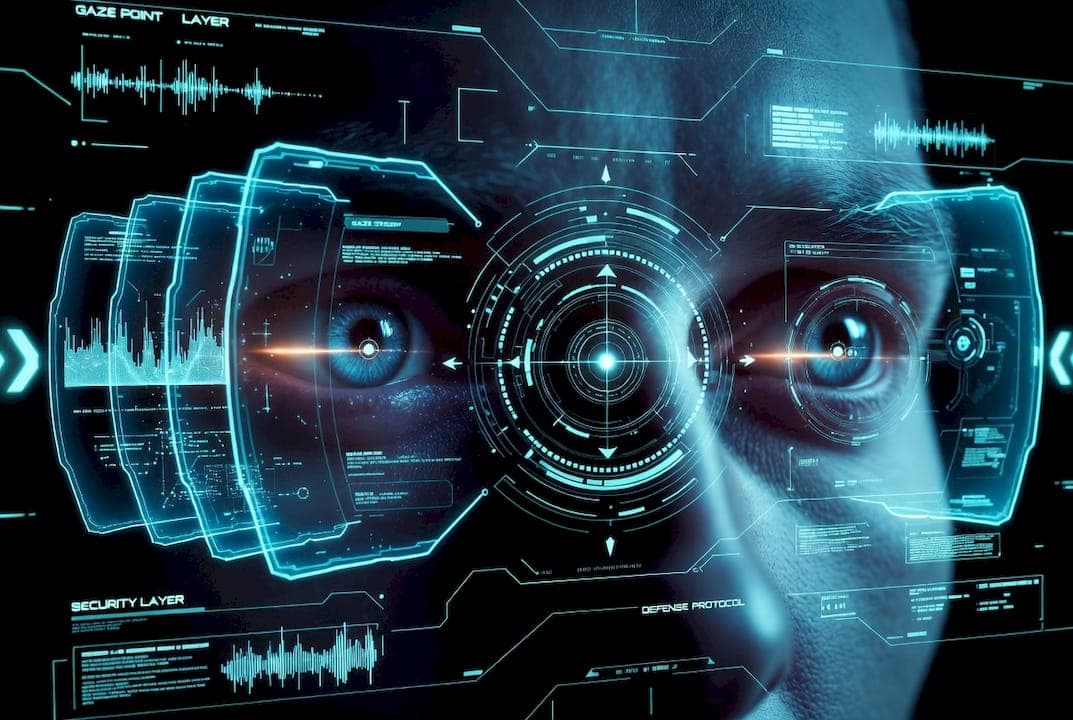
- Gaze biometrics leverages subconscious eye movement patterns that are invisible to observers and resistant to replay attacks. It enables secure, calibration-free authentication using standard webcams, ensuring privacy through device-local processing and liveness detection. This modality offers a highly defensible security layer that surpasses traditional physical and knowledge-based methods.
Passwords fail. PINs get shoulder-surfed. Fingerprints can be lifted from a coffee cup. The persistent question for security architects and product teams is whether any biometric truly qualifies as defensible technology, one that holds up under adversarial conditions rather than just adding friction. Gaze biometrics answers that question differently from every other modality. Because eye movement patterns are subconscious and instantaneous, they cannot be observed, memorized, or replicated the way a PIN or a fingerprint can. Understanding why gaze biometrics is defensible technology requires examining the signal itself, the architecture around it, and what 2026 research now confirms about its real-world performance.
Table of Contents
Key Takeaways
| Point | Details |
|---|---|
| Non-observable authentication signal | Gaze patterns cannot be seen or copied by an observer, making shoulder surfing attacks structurally impossible. |
| No specialized hardware required | Modern implementations use standard webcams and computer vision frameworks, reducing deployment barriers significantly. |
| Behavioral dynamics resist spoofing | Gaze biometrics captures subconscious micro-movements that cannot be reconstructed from a photograph or recording. |
| Fusion methods improve robustness | Combining continuous gaze offset with temporal signals maintains accuracy even in degraded or noisy environments. |
| Device-local processing is non-negotiable | Storing biometric templates on-device and using liveness detection is the architectural baseline for defensible deployment. |
How gaze biometrics actually works
Gaze biometrics is a behavioral biometric modality that identifies individuals through the unique way their eyes move when processing visual stimuli. The core data sources are fixation patterns, saccadic trajectories, smooth pursuit characteristics, blink frequency, and pupil dilation responses. Each of these signals is shaped by neurocognitive architecture that differs across individuals and changes only gradually over time.
Modern deployments leverage standard webcams with MediaPipe Face Mesh for real-time facial landmark detection, extracting gaze vectors from iris position relative to eye corners. This eliminates the need for dedicated infrared eye trackers, which historically made gaze-based systems too expensive and environment-sensitive for production use. The technical barrier that kept this modality in research labs for a decade has effectively been removed.
It is worth distinguishing between hard biometrics and soft biometrics in this context. Hard biometrics are directly used for identity verification, such as a gaze feature vector matched against an enrolled template. Soft biometrics are supplementary signals like reading speed or scan patterns that provide contextual support. Gaze systems can operate in both modes, either as a standalone primary authenticator or as a continuous behavioral layer monitoring for anomalies during an active session.
The key feature sets used for template matching include:
-
Fixation duration and density maps: Where the user holds gaze and for how long during a stimulus presentation
-
Saccade amplitude and velocity profiles: The speed and arc of eye jumps between fixation points
-
Smooth pursuit gain: How accurately the eye tracks a moving object, which is highly individual
-
Microsaccade frequency: Tiny involuntary movements during fixation that are nearly impossible to consciously control
-
Blink rate and inter-blink interval: Correlates with cognitive state and varies by individual baseline
Pro Tip: When evaluating gaze biometric systems for enterprise deployment, request Equal Error Rate benchmarks specifically under no-calibration conditions. Systems that require calibration introduce a usability bottleneck that degrades adoption rates in real production environments.
Why gaze biometrics is a defensible technology
The case for gaze biometrics as defensible technology rests on several compounding properties that distinguish it from both knowledge-based authentication and traditional physical biometrics.
Non-observability eliminates an entire attack class
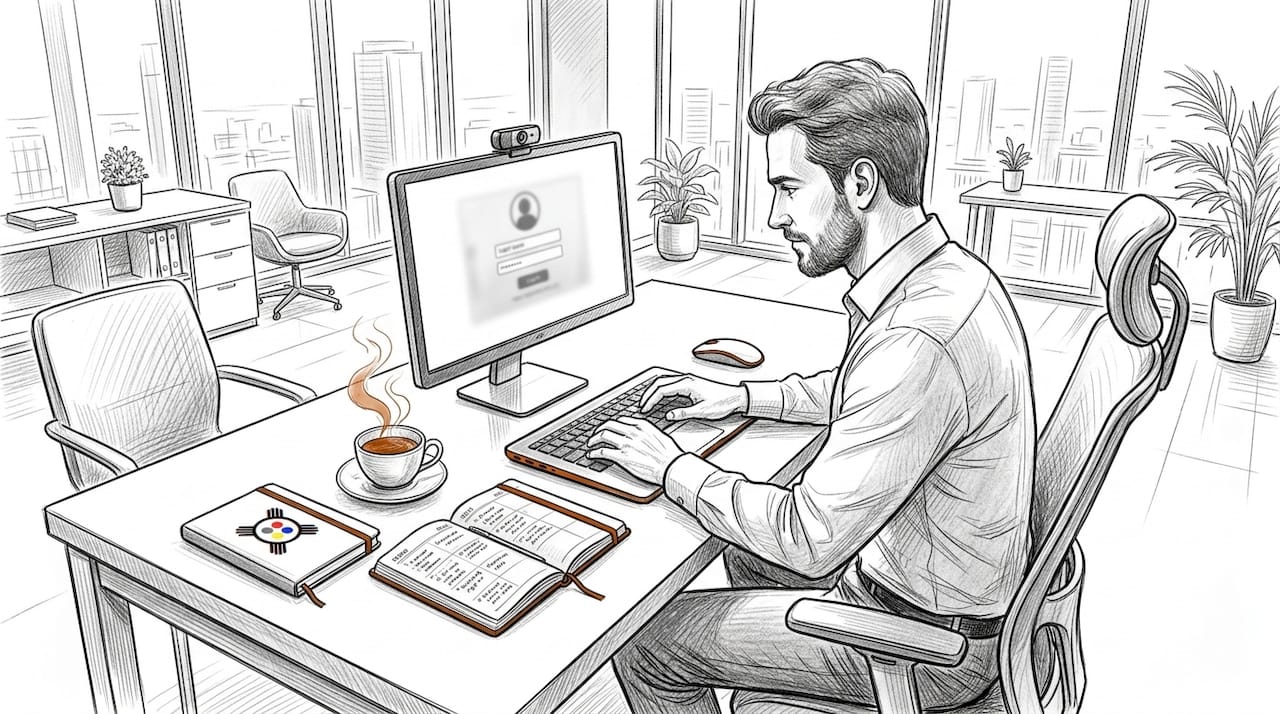
The most structurally significant advantage is that gaze-based authentication prevents shoulder surfing by design. An attacker standing beside a user cannot observe, record, or reconstruct a gaze signature from visual inspection. This is not a mitigation. It is a categorical elimination of the attack vector. No overlay, no screen filter, no behavioral change by the user is needed. The authentication signal is invisible by its physical nature.
Behavioral dynamics create a spoofing barrier
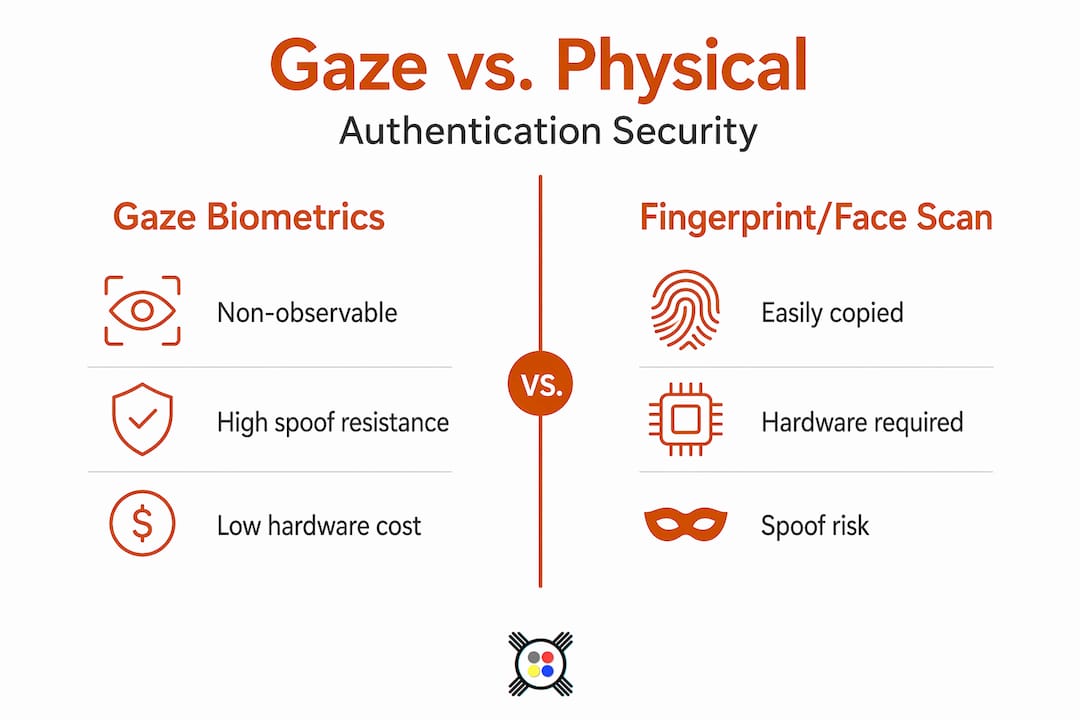
Physical biometrics like fingerprints and facial geometry are static data structures. A high-resolution photograph or a 3D-printed mold can defeat them. Gaze biometrics is a time-series behavioral signal generated by live neural activity. Reproducing it requires not just the pattern but the exact timing, micro-movement variance, and stimulus response profile of the enrolled user. The combination of Z-score matching and facial landmark detection used in current systems adds statistical rigor that makes threshold manipulation attacks far more difficult.
Layered security through integration
The following properties make gaze biometrics particularly effective when integrated into multi-factor authentication architectures:
-
Gaze authentication can run silently in the background during an active session, functioning as continuous identity verification rather than a one-time gate
-
Combining gaze with a traditional credential adds a second factor that cannot be stolen through phishing or credential stuffing
-
Score-level fusion with continuous gaze offset improves robustness under real-world degraded conditions without requiring model retraining
-
Real-time liveness detection is inherent to the modality, since the system is observing live neural motor output rather than a stored artifact
-
Device-local template storage means the raw biometric data never transits a network, removing an entire class of interception and breach risk
According to current security architecture standards, device-local storage combined with liveness detection is now the baseline requirement for any biometric system to be considered defensible in 2026. Gaze biometrics, when implemented correctly, satisfies both requirements architecturally rather than through add-on controls.
Statistic: Nonlinear fusion methods applied to continuous gaze offset data reduce error rates significantly in degraded conditions, such as those found with consumer VR headsets, where pure temporal gaze models consistently underperform.
For security teams assessing gaze biometrics technology advantages against alternatives, the combination of non-observability, behavioral complexity, continuous session monitoring capability, and device-local processing creates a security profile that no other single biometric modality currently matches. Reviewing biometric technology competitive positioning reinforces why this matters in enterprise security design.
Recent research validating performance and usability
The theoretical advantages of gaze biometrics have been validated and extended by a strong body of 2026 research. The field has moved decisively from laboratory demonstrations to deployable system architectures.
Accuracy improvements from symmetric stimuli
One of the most practical findings this year comes from work on symmetric dynamic stimuli for gaze authentication. Symmetric animations improve accuracy by 3% and reduce Equal Error Rate by 2% compared to asymmetric stimulus designs. More importantly for deployment contexts, symmetric stimuli enable 10-second authentication without requiring calibration. That figure is competitive with fingerprint readers and substantially faster than multi-step MFA flows.
The table below summarizes performance comparisons across authentication modalities relevant to enterprise deployment decisions:
| Modality | Spoofing resistance | Calibration required | Hardware cost | Shoulder surfing risk |
|---|---|---|---|---|
| Gaze biometrics | High (behavioral) | No (current systems) | Low (webcam) | None |
| Fingerprint | Medium (liftable) | No | Medium | None |
| Facial recognition | Low-Medium (photo spoofable) | No | Low-Medium | None |
| PIN/Password | Very low | No | None | High |
| Iris scan | High | Yes | High | None |
Privacy-preserving training data through diffusion models
A significant concern in biometric system development is training data scarcity and privacy risk from raw biometric databases. Research into diffusion-based gaze synthesis addresses this directly. Diffusion models generate synthetic gaze sequences with greater than 0.9 cosine similarity to real data, outperforming GAN approaches in both spatial accuracy and jitter reduction. This means organizations can train and test gaze biometric systems without accumulating large repositories of real user gaze data, a material privacy advantage.
Pro Tip: When evaluating vendor claims about gaze model accuracy, ask specifically whether training data is real or synthetic and how similarity was validated. A cosine similarity above 0.9 for synthetic gaze sequences is currently the benchmark that indicates production-grade model quality.
Robustness under degraded conditions
Continuous gaze offset signals provide supplementary biometric data that improves authentication under real-world, noisy conditions where temporal-only models degrade. This matters for mixed-reality and AR/VR environments, which represent significant deployment targets for gaze biometric systems. The fusion approach works at the score level, meaning it does not require retraining the underlying model, only combining output scores from the temporal and spatial components before the final decision. This is a deployment-friendly architecture that allows incremental hardening without pipeline replacement. Understanding how optical encryption strengthens spatial computing security provides useful context for teams thinking about gaze biometrics within broader XR security architectures.
Privacy, ethics, and deployment considerations
The same properties that make gaze biometrics powerful for authentication create real obligations for the teams deploying it. Eye tracking data is not merely a credential. Gaze data may implicitly reveal identity, demographics, and personal traits, including neurological indicators, cognitive load states, and potentially health-related information. Treating it as equivalent to a password hash is architecturally and legally insufficient.
The following principles define responsible deployment:
-
Device-local processing only: Raw gaze data should never be transmitted to a server. Feature extraction and template matching must occur on the endpoint. This is both a privacy control and a security control.
-
Minimal data retention: Enrolled templates should be cryptographically bound to the device and deleted when a user offboards. No behavioral telemetry should be retained beyond the authentication decision window.
-
Informed consent with specificity: Users must understand that gaze data captures more than a simple credential. Consent flows should describe what signals are captured, where they are processed, and what is retained.
-
Environmental scope limitation: Systems should be designed to operate only during explicitly triggered authentication events, not as ambient monitoring tools.
“Modern biometric security must move to device-local template storage combined with liveness detection to be defensible in contemporary architectures.” — Biometric authentication guide, Deepak Gupta
On the regulatory front, gaze biometric data falls under biometric information laws in jurisdictions including Illinois (BIPA), the EU (GDPR Article 9), and a growing number of US state-level frameworks. Security teams should engage legal counsel before deployment and treat gaze data as a special category from the first line of architecture. The biometric security industry landscape in 2026 covers the current regulatory terrain in more detail for teams conducting due diligence.
My perspective: why this modality is different
I’ve watched security teams invest heavily in fingerprint and facial recognition systems only to watch those controls get bypassed with a printed photograph or a lifted print within weeks of deployment. The pattern is consistent. Physical biometrics protect against casual threats but fail badly against motivated adversaries with moderate resources.
What I find genuinely different about gaze biometrics is that the attack surface is structural rather than technical. You cannot photograph someone’s microsaccade profile. You cannot replay a gaze session because the stimulus changes each time. The defense does not depend on keeping the template secret from a determined attacker. It depends on the fact that the signal itself cannot be extracted from a person without their active, live cooperation. That is a fundamentally different security guarantee.
In my view, the teams who will get the most value from this technology are those who treat it as a behavioral layer rather than a replacement for other controls. Pairing gaze biometrics with hardware-bound credentials, such as a FIDO2-compliant security key, creates an authentication stack where each factor defeats the attack vectors that threaten the others. The practical challenge ahead is not technical. It is persuading product teams to invest in the integration work before a breach forces the conversation.
— Joshua
Gaze biometrics in practice with Jett Optics
Jett Optics has built its authentication platform around the exact properties that make gaze biometrics defensible technology. The architecture is designed from first principles: device-local gaze processing, Agentive Gaze Tensors (AGT) as cryptographic primitives, and quantum-resistant encryption layered over behavioral biometric inputs.
JettChat Encrypted Messaging integrates gaze verification directly into the secure messaging workflow, so access is gated by a live behavioral signal rather than a static credential. The Optical Spatial Encryption platform extends this model to spatial computing environments, using gaze tensors as keys within a post-quantum, blockchain-compatible architecture. Both products implement the device-local processing model and real-time liveness detection that current security standards require. For teams building secure authentication into enterprise or consumer products, Jett Optics provides both reference architectures and deployable SDKs. Explore the platform at jettoptics.ai to review technical documentation and connect with the team.
FAQ
What makes gaze biometrics defensible compared to other modalities?
Gaze biometrics captures subconscious behavioral signals that cannot be observed, copied, or replayed, eliminating shoulder surfing and standard spoofing attacks. Combined with device-local processing and liveness detection, it satisfies current defensible biometric architecture requirements.
How does gaze biometrics work without specialized hardware?
Modern gaze biometric systems use standard webcams paired with computer vision frameworks like MediaPipe Face Mesh to extract gaze features in real time, requiring no infrared hardware or dedicated eye trackers.
Is gaze biometrics secure enough for enterprise authentication?
Yes, particularly when used as part of a layered authentication architecture. Score-level fusion of gaze offset signals with temporal biometrics maintains accuracy under degraded conditions, and symmetric stimulus designs now achieve sub-10-second verification without calibration.
What are the main privacy risks of gaze biometric systems?
Gaze data can implicitly reveal demographic information, neurological indicators, and personal traits beyond identity. Responsible deployment requires device-local processing, minimal data retention, and explicit informed consent.
Can gaze biometrics be spoofed with a recorded video?
No. Gaze biometric systems using dynamic stimuli present a different challenge each session, making replay attacks ineffective. The behavioral signal is generated by live neural motor output and cannot be reconstructed from a recording.