

Choosing an optical biometric authentication platform that balances robust security, seamless user experience, and practical integration demands is complicated by competing requirements from modern digital environments. Many vendors either require proprietary hardware that limits deployment flexibility, lack independent security audits, or do not support consistent authentication across both web and mobile platforms. This comparison covers hardware dependencies, developer flexibility, and credential standards so you can select an optical biometric authentication solution that matches your rollout and assurance requirements.
Table of Contents
Jett Optics
At a Glance
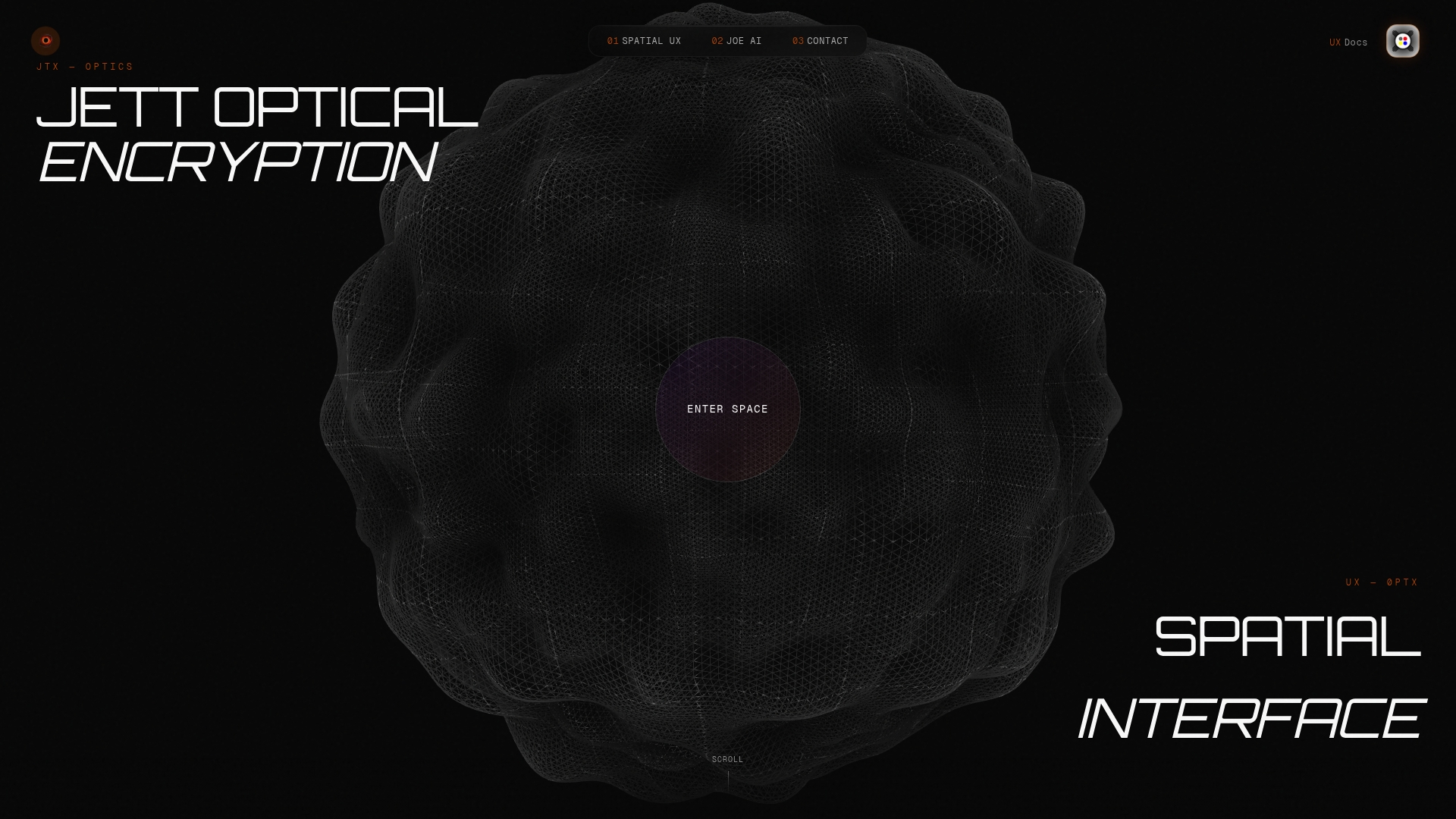
Jett Optics’ marketing materials claim it is the first commercial platform to integrate human gaze as a post-quantum cryptographic primitive, combining gaze tensors with on-chain attestations and tokenized governance.
The vendor advertises a multi-token ecosystem, Proof-of-Attention consensus, and SDKs for developers interested in embedding attention as an authentication factor.
Core Features
Spatial encryption that maps eye movement trajectories into cryptographic inputs sits alongside Adaptive Gaze Tensors (AGTs) for biometric verification. The stack includes on-device edge AI and tools to translate gaze traces into attestations.
A Proof-of-Attention consensus mechanism ties visual engagement to on-chain events, and the AARON Protocol provides a pathway for storing biometric proofs on Solana-compatible ledgers.
The platform also exposes developer SDKs, staking and governance tokens ($JTX), and interoperability hooks for ecosystems like Solana, XRPL, and DePIN infrastructure partners.
Key Differentiator
The single feature that distinguishes Jett Optics is the vendor claim of commercializing gaze as a cryptographic primitive. That commercial claim means projects can experiment with attention-linked identity rather than relying solely on passwords or device keys.
This approach shifts the verification vector from possession or knowledge to measured visual behavior, which changes threat models and gives architects a new signal to combine with existing multi-factor controls.
Pros
-
Gaze-based primitives create a biometric signal that is hard to reproduce remotely, giving security architects an extra entropy source to combine with keys or hardware attestation.
-
The AARON Protocol enables on-chain identity proofs, letting decentralized apps anchor biometric attestations to transaction history and reputation tokens where required.
-
SDKs and edge AI components mean developers can prototype gaze verification in XR and AR use cases without building low-level optics pipelines from scratch.
-
Token mechanics and staking add a governance and economic layer for communities that want to control feature rollout or grant access via reputation tokens.
-
Integration points with Solana, XRPL, and DePIN tooling reduce friction for teams already building in those stacks.
Cons
- The approach requires specialized sensors or integration with eye-tracking hardware, which raises the barrier for mainstream deployment and may slow pilot rollouts.
Who It’s For
Security engineers, blockchain developers, and identity providers exploring alternatives to traditional authentication: teams building metaverse access controls, decentralized identity systems, or Web3 dApps that need a hands-free, attention-linked second factor.
Early adopters with XR/AR projects or custom hardware capabilities will extract the most value from the developer SDKs and staking governance model.
Unique Value Proposition
The platform exposes developer-facing primitives—AGTs, on-chain attestations via the AARON Protocol, and a Proof-of-Attention consensus—that let teams convert measured attention into auditable identity claims. For a project that needs to cryptographically bind user gaze to an on-chain identity, that toolchain shortens prototype cycles and keeps the verification flow on-chain.
Rather than retrofitting generic biometrics onto blockchains, Jett Optics provides a workflow and token model designed to make attention proofs part of application state and governance.
Real World Use Case
A metaverse operator integrates Jett Optics SDKs to gate access to high-value virtual rooms. When a user enters, the system records an AGT-derived attestation, stakes a small $JTX bond as an interaction receipt, and writes a hashed proof via the AARON Protocol to Solana for later dispute resolution.
This ties session access to a verifiable attention event and lets the operator revoke or validate access with on-chain evidence rather than logs alone.
Website: https://jettoptics.ai
GestureKey
At a Glance
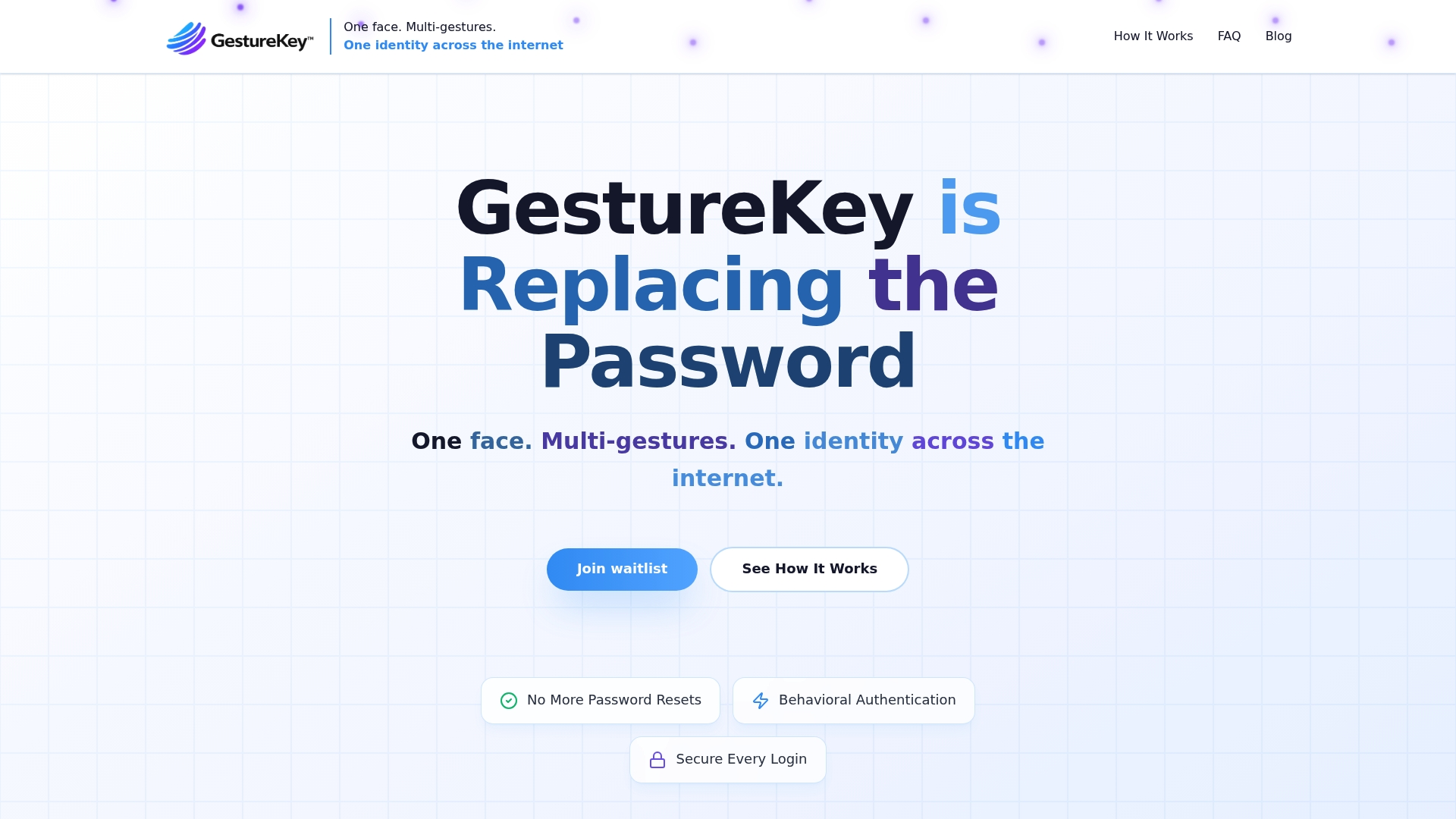
GestureKey’s marketing materials claim authentication completes in under 2 seconds, aiming for near-instant passwordless access. The vendor also reports a waitlist of over 1,000 users, which signals early interest but also that the product is in limited release.
GestureKey combines gesture-driven behavioral biometrics with a rewards mechanism to nudge users toward secure behavior.
Core Features
-
Behavioral biometric authentication that analyzes gestures and interaction patterns rather than a typed secret.
-
Universal device compatibility across mobile, tablet, laptop, and desktop, allowing one integration to cover multiple client platforms.
-
Fast authentication flows intended to finish in under 2 seconds and an SDK that claims deployment in days.
-
An incentivized reward system that grants users benefits for secure activity and usage.
Key Differentiator
GestureKey centers on multi-gesture verification as the core credential. Unlike single-factor biometrics, it stitches short gesture sequences and interaction signals into an authentication surface that works across devices. That design targets products where biometric continuity across mobile and desktop matters to user experience and fraud reduction.
Pros
-
Eliminates passwords and the usual reset headaches. Removing the password layer simplifies login flows and lowers support tickets.
-
The vendor advertises a 80% reduction in credential-based breaches, a claim that, if accurate, would materially cut account takeover risk for platforms that adopt GestureKey.
-
Rapid integration via an SDK designed for days not weeks. For engineering teams focused on launch velocity this short ramp is attractive.
-
Rewards tied to secure authentication help increase opt-in rates and reduce user friction for sensitive flows.
-
Broad device coverage reduces the need for separate mobile and web solutions and keeps the authentication model consistent.
Cons
-
No independent third-party reviews are provided in the available materials, so real-world resilience under attack is not externally validated.
-
Public details on customization, model tuning, and scalability are limited, which leaves questions for large enterprise deployments.
-
Pricing and trial options are not published, creating procurement friction for teams that require budget transparency.
-
Early access status and a reported waitlist imply staged rollout and possible feature gating during initial integrations.
When It May Not Fit
If you need a vendor with public security audits, long-term certification history, or transparent pricing, GestureKey’s current early access posture may slow procurement. Large organizations that require fine-grained customization or proof of scale should treat the limited public detail on scalability as a gating factor.
If your compliance or procurement process demands published SLAs and pricing, this product may not clear those gates yet.
Who It’s For
Platform developers and enterprise security teams that want a single passwordless surface across mobile and web. Teams building fintech, account-based services, or consumer platforms that value fast login and behavioral signals will get the most value from GestureKey’s model.
Real World Use Case
A fintech app integrated the GestureKey SDK to replace passwords for account logins and high-value transactions. The app reported fewer password resets and a measurable drop in support tickets while offering users small rewards for secure session confirmations.
Pricing
The vendor lists pricing as not applicable and presents GestureKey as informational only at this stage. Interested teams must join the waitlist or contact the vendor for early access terms and enterprise pricing details.
Website: https://gesturekey.io
PayEye
At a Glance
PayEye reports more than 130,000 successful biometric transactions and participation in the Mastercard Biometric Checkout Program across Europe and North America. That exposure pairs iris and face fusion inside the eyePOS 3.0 device for contactless payment and identity verification.
Core Features
PayEye combines iris and facial recognition algorithms with an on-premises POS device and backend verification pipeline. The stack supports card, NFC, and mobile payments while keeping verification contactless and fast.
Proprietary algorithms have been evaluated by third parties like NIST and iBeta, and the vendor develops its own hardware, firmware, and biometric software to keep performance and security tightly coordinated.
Key Differentiator
The product data positions PayEye as the first provider to fuse iris and face recognition in a single multifunctional POS that supports all major payment standards. That design removes the need for separate biometric kiosks and payment terminals and aims to shorten transaction time while adding a biometric layer to standard payment rails.
Pros
-
High-assurance authentication: The fusion of iris and facial biometrics raises the bar for spoof resistance while reducing false accepts compared with single-modal setups.
-
Vertical control of the stack: In-house hardware and algorithm development gives PayEye direct control over firmware updates, latency tuning, and on-device security.
-
Field pilots at scale: The vendor reports large pilots, including retail and hospitality pilots, which supports real-world usability and merchant acceptance learning.
-
Regulatory and security credentials: Certifications listed include PCI-PTS, EMVCo, FIDO, and ISO 27001, which matter when integrating into payment and government environments.
Cons
-
Commercial rollout status: Deployments remain largely in pilot phases, so broad production references are limited and availability may vary by market.
-
User interaction required: The system relies on active user participation, meaning customers must look toward the sensor for a successful transaction, which affects some accessibility flows.
-
Hardware dependence: The approach requires specific proprietary terminals, which can constrain integration choices and complicate multi-vendor hardware strategies.
When It May Not Fit
If you need a purely software biometric layer that runs on existing merchant POS hardware, this solution may not match your constraints. If you operate environments where passive enrollment is mandatory or you cannot deploy dedicated terminals, PayEye’s hardware requirement will be a blocker.
Notable Integrations
-
Mastercard Biometric Checkout Program
-
Stripe
-
Worldline
These integrations indicate payment-rail connectivity and pilot partnerships rather than turnkey merchant installations in every market.
Who It’s For
Large retailers, payment processors, and government agencies that plan controlled rollouts of biometric payments and can provision dedicated terminals. Also suitable for security teams who need a tightly controlled hardware and software supply chain for high assurance use cases.
Real World Use Case
A Polish retail chain ran pilots with PayEye’s eyePOS 3.0 in supermarkets, cinemas, and hotels to test hygiene, speed, and checkout acceptance. Reported findings from those pilots highlighted shorter queues and smooth customer onboarding during trials.
Pricing
Not applicable. The vendor presents PayEye as an informational offering in the product data, with pricing and commercial terms handled via enterprise negotiations and pilot contracts rather than public tiered plans.
Website: https://payeye.com
Comparative Analysis
In the expanding field of optical biometric authentication technologies, choosing the appropriate solution depends on the specific needs and constraints of organizations and developers. This analysis evaluates jettoptics.ai against competitors to highlight differentiating features and trade-offs.
Unique Technical Solutions
Jett Optics introduces an approach by leveraging gaze-based cryptographic primitives. Compared to GestureKey, which focuses on gesture biometrics with rapid authentication processes, and PayEye, which combines iris and facial recognition for payment systems, Jett Optics’ usage of Adaptive Gaze Tensors provides a novel dimension of user authentication, particularly beneficial for scenarios requiring hands-free interaction or attention-linked processes. However, Jett Optics requires specialized hardware for deployment, whereas GestureKey operates broadly on various consumer devices.
Adaptability Across Deployment Scenarios
PayEye’s integration of biometric technology with payment processing through dedicated hardware caters to retail and secure payment environments. GestureKey offers attractive fast-set integration and platform-wide operation for developers aiming for speedy implementation. Jett Optics addresses unique identity verification applications in AR/VR and decentralized platforms but may involve substantial development effort for use-case-specific adjustments compared to the other options.
Best Fit Evaluation by Scenario
-
Attention-Based Decentralized Identity: Adopt Jett Optics’ solution for implementing gaze-linked identity verification within AR/VR experiences or blockchain applications.
-
Rapid Multi-Device Accessibility: Choose GestureKey for a versatile, fast solution that functions across mobile and desktop platforms for consumer services and fintech.
-
Contactless Payment Systems: Opt for PayEye when enhancing a retail infrastructure with integrated high-assurance biometric payment verification.
Our Pick
Jett Optics offers innovation with its integration of gaze-based authentication into decentralized and blockchain frameworks. Organizations focusing on cutting-edge biometric applications in such environments will benefit greatly. However, for teams prioritizing immediate deployment or payment processing integration, competing tools like GestureKey or PayEye may align better with their objectives.
Optical Biometric Authentication Platforms Compared
Choosing an optical biometric authentication platform requires assessing features like integration depth, technology uniqueness, and user scenarios.
| Product | Key Differentiator | Best For | Pricing | Notable Limitation |
|---|---|---|---|---|
| Jett Optics | Gaze as a cryptographic primitive | Teams innovating in XR/AR and blockchain | Not disclosed | Requires specialized eye-tracking hardware |
| GestureKey | Multi-gesture behavioral biometric approach | Passwordless login across devices | Not disclosed | Limited public third-party validation of system resilience |
| PayEye | Iris and face fusion supported on the eyePOS 3.0 | Retailers requiring secure contactless payments | Not disclosed | Dependency on proprietary hardware for deployment |
Elevate Your Security with Jett Optics as a Leading tensoroptics.com Alternative
Finding a solution that truly leverages human attention as a cryptographic key can feel challenging when exploring tensoroptics.com alternatives. Jett Optics tackles this by transforming gaze into biometric encryption through Adaptive Gaze Tensors and blockchain-attested identity verification. This approach shifts authentication beyond passwords to a more secure, measured visual behavior signal.
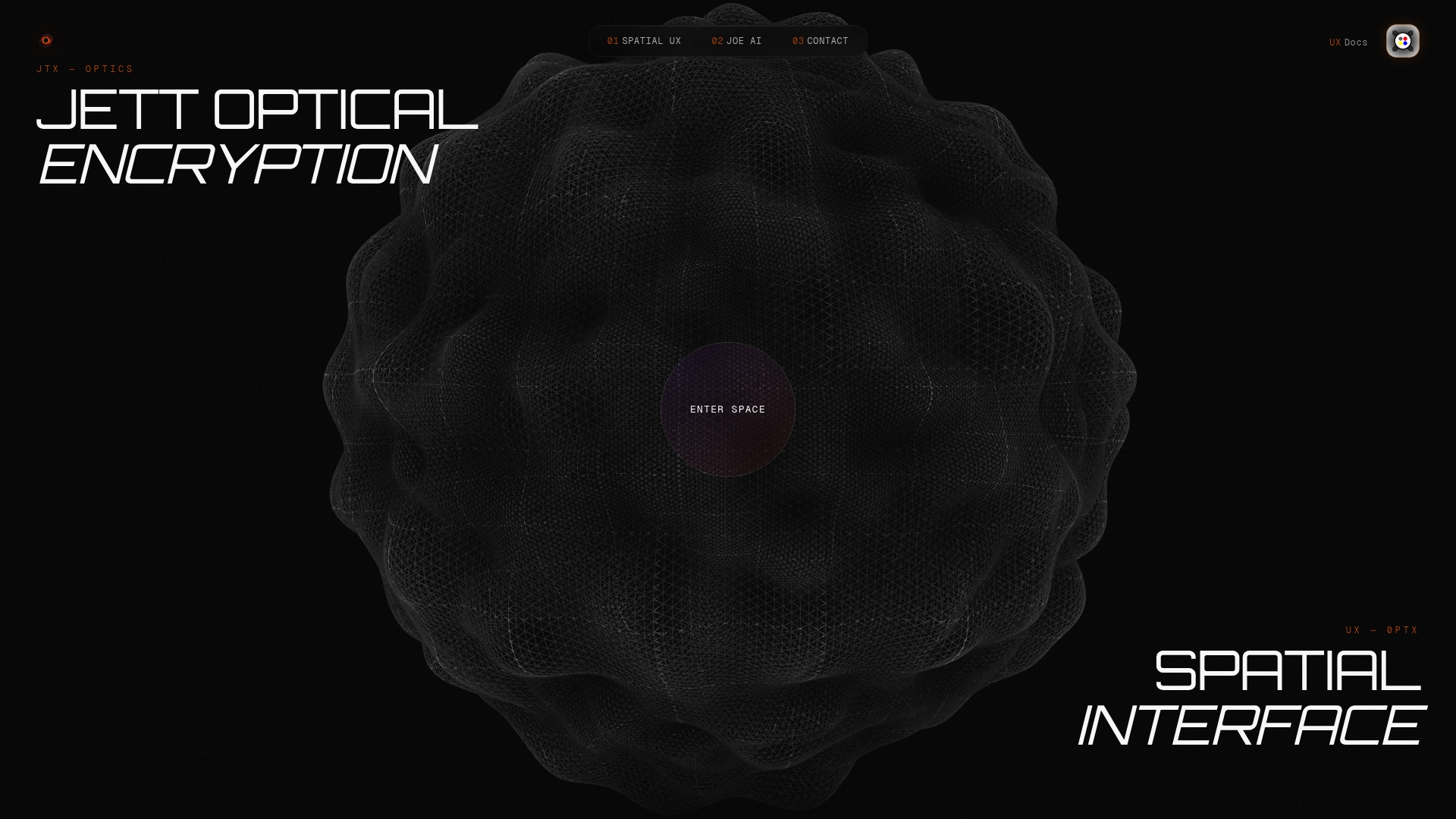
Discover how Jett Optics streamlines spatial authentication, quantum-resistant encryption, and developer-friendly SDKs in one platform. Don’t let limited biometric options hold you back. Visit Jett Optics to explore how your project can bind user attention to on-chain identities with the AARON Protocol and Proof-of-Attention consensus. Start securing your digital environment with gaze-powered cryptography today.
Frequently Asked Questions
What unique verification capability does Jett Optics offer compared to traditional methods?
Jett Optics utilizes gaze-based primitives for biometric verification, creating a biometric signal hard to replicate remotely. This feature allows for enhanced security by shifting the verification process from possession or knowledge to measured visual behavior, which is a distinct advantage in ensuring identity verification.
How does the Proof-of-Attention mechanism in Jett Optics differ from GestureKey’s approach to authentication?
GestureKey focuses on multi-gesture verification, which analyzes short gesture sequences for authentication across devices, providing a unique user experience. In contrast, Jett Optics ties visual engagement to on-chain events through its Proof-of-Attention consensus, making it a better fit for use cases requiring attention-linked identity verification in blockchain applications.
Can Jett Optics be integrated with existing hardware systems?
Jett Optics requires specialized sensors for eye tracking, which needs consideration for integration with current hardware systems. This specialized requirement may slow pilot rollouts but potentially elevates the security and user experience for dedicated applications.
What advantage does Jett Optics offer for developers building applications?
Jett Optics provides developer SDKs and tools that allow for easy prototyping of gaze verification in XR and AR applications, significantly shortening the development cycle compared to building low-level optics pipelines from scratch. This makes it a practical choice for teams looking to implement biometric authentication solutions quickly.
How does Jett Optics’s staking model benefit its user community?
The staking mechanics in Jett Optics add an economic layer for communities that want control over feature rollouts and governance. This can create a sense of ownership and involvement among users, enhancing engagement with the platform.