

Deploying optical biometric authentication that truly protects user privacy and resists replay attacks is far more complicated than standard biometrics promise. Too many current systems either depend on centralized biometric databases, require expensive enterprise contracts with opaque pricing, or limit integration to rigid legacy workflows. This comparison presents how Jett Optics, Anonybit, and Indicio handle storage architecture, compliance, and deployment costs so you can match a privacy-first alternative to your technical and regulatory needs.
Table of Contents
Jett Optics
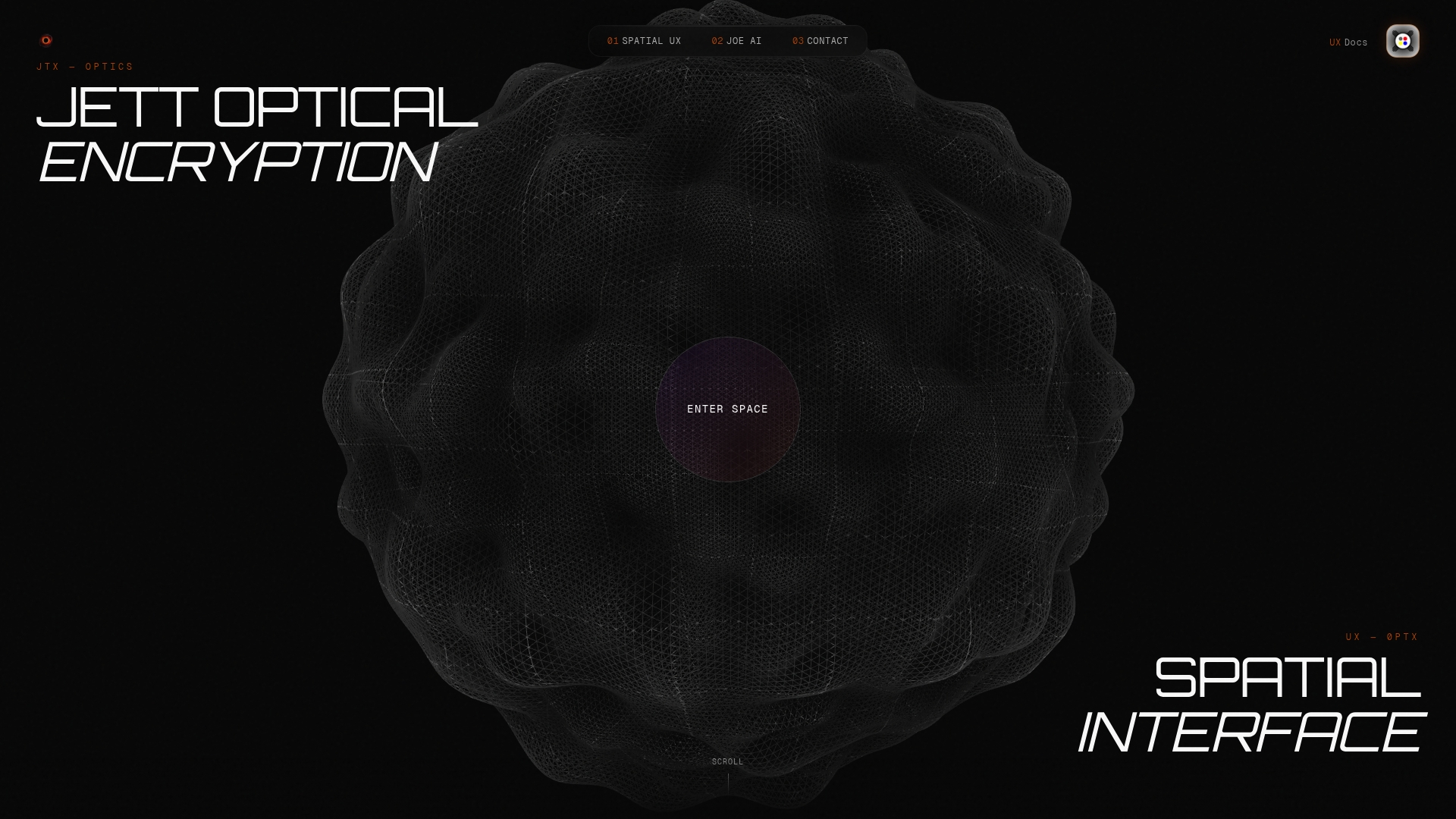
At a Glance
Starts at $8.88 per month for the MOJO tier and scales to $88.88 for SPACE COWBOY, with token staking options for discounts or lifetime access. The vendor advertises an adaptive gaze tensor method combined with Markov chain cryptography for quantum-resistant, spoofproof biometric authentication. Jett Optics pairs that approach with hardware and on-chain tooling aimed at Web3 and DePIN projects.
Core Features
-
Agentive Gaze Tensors (AGTs): Spatial encryption that treats gaze patterns as cryptographic keys for evolving biometric proofs.
-
Post-quantum authentication that the vendor positions to resist deepfake spoofing and quantum attacks through Markov-chain based cryptography.
-
AARON Protocol: On-chain biometric attestations and immutable proofs designed for Web3 identity and DePIN validation.
-
Proof-of-Attention (PoA) mechanisms that convert human gaze sessions into network security signals and token rewards.
-
Hardware and SDKs for building gaze-authenticated apps, plus developer tools for integrating gaze proofs into decentralized flows.
Key Differentiator
The technical claim above about adaptive, dynamic gaze tensors is the core differentiator. Jett Optics combines spatial gaze encoding with Markov chain cryptographic layers so biometric input becomes a changing cryptographic key rather than a static identifier. That shifts the attack surface: replay attacks and simple spoof attempts no longer map to a fixed credential.
Pros
-
Deep on-chain tooling. On-chain attestations and the AARON Protocol let teams create immutable biometric proofs without shoehorning standard identity flows into bespoke chains.
-
Developer-friendly tiers. MOJO, DOJO, and SPACE COWBOY provide a clear ramp from single developers to teams, so prototyping gaze-authenticated apps is predictable cost-wise.
-
Token economics tied to authentication. Staking JTX or OPTX can reduce subscription spend and embed economic incentives into Proof-of-Attention flows.
-
Research and ecosystem orientation. The platform explicitly targets cryptography and computer vision collaboration, which helps security teams validate theoretical claims with live experiments.
-
Native Web3 integrations. Built-in support for major chains and DePIN primitives reduces glue code when moving proofs on chain.
Cons
- Requires specialized eye-tracking hardware, which constrains mass adoption and complicates rollouts for consumer-facing applications.
Notable Integrations
-
Solana
-
Raydium
-
LayerZero
-
OpTrust
-
XRP Ledger
-
OpenAI
-
NVIDIA
Who It’s For
Developers, security researchers, and decentralized infrastructure teams building identity, access, or validation systems that need human-attention based proofs. Best fit for projects already comfortable with blockchain tooling and willing to include dedicated hardware in their trust model.
Unique Value Proposition
Staking JTX tokens reduces subscription costs or can unlock lifetime access, which turns early technical buy-in into an economic lever. For teams that will run long-term validators or attention rewards, that model converts operational spend into on-chain stake tied to network participation and governance.
Real World Use Case
A DePIN operator replaces password logins for physical access with gaze-based authentication. Users authenticate by completing a gaze session; the system mints an on-chain attestation via AARON and issues tokens for genuine attention, preventing replay attacks and rewarding verified participation.
Pricing
Subscription-based tiers start at $8.88/month for MOJO, $28.88/month for DOJO, and $88.88/month for SPACE COWBOY. The vendor also offers staking options where staking JTX tokens can reduce recurring fees or grant lifetime access.
Website: https://jettoptics.ai
Anonybit
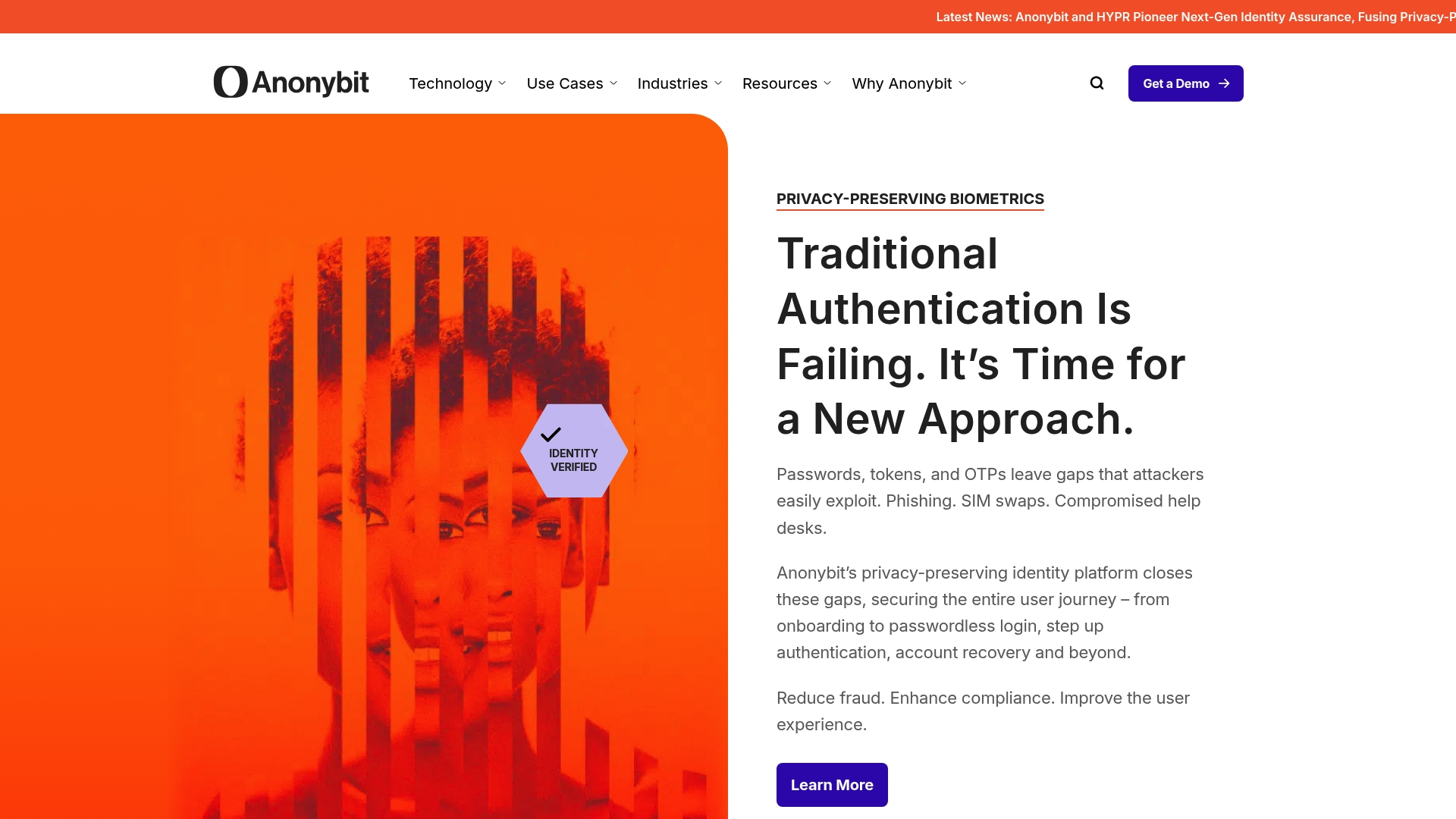
At a Glance
The vendor describes a decentralized biometric cloud architecture as the core control point for biometric templates and cryptographic separation of identity data. According to the company, that architecture is designed to help organizations meet GDPR and CCPA requirements while removing passwords from common flows.
Core Features
-
Decentralized biometric data storage that aims to keep raw templates out of centralized databases and split trust across nodes.
-
Passwordless authentication with multi-modal biometrics and deepfake detection for stronger liveness checks.
-
Digital onboarding with duplicate detection and blocklist checks to stop synthetic identities early.
-
Device binding to tie a biometric assertion to a trusted endpoint for session and transaction validation.
-
Account recovery flows that rely on biometric verification rather than SMS or email OTPs.
Key Differentiator
That decentralized biometric cloud is the single differentiator to watch. The vendor positions it as a way to reduce insider risk and central breach impact by splitting biometric artifacts across an architecture that does not depend on a single vault.
Pros
-
Offers privacy-focused design and cryptographic separation that can reduce single points of failure in identity stores. This aligns with security reviews that prioritize minimizing exposure.
-
Supports a broad set of enterprise identity workflows. You get onboarding, authentication, device binding, and biometric-based account recovery in one platform.
-
Integrates with existing IAM platforms such as Ping and Okta to slot into current identity stacks with fewer rip-and-replace migrations.
-
Multi-modal biometrics plus deepfake protection raise the bar against presentation attacks more than single-factor biometric systems.
-
The architecture is aimed at regulated industries by design which simplifies internal compliance conversations compared with bespoke builds.
Cons
-
Public case studies and user reviews are limited, so real-world operational behavior and usability remain hard to validate from outside the vendor.
-
The privacy-preserving architecture adds integration complexity. Teams unfamiliar with decentralized key management should budget for specialist implementation resources.
-
Pricing is not listed publicly. The vendor lists enterprise-focused, custom quotes which makes cost comparisons slower during vendor selection.
When It May Not Fit
If your organization lacks an identity engineering team or access to cryptographic expertise, deploying a decentralized biometric cloud will add time and vendor coordination. Open source or transparent performance benchmarks are also thin, so buyers that require peer-reviewed metrics may prefer vendors with extensive published audits.
Who It’s For
Large enterprises and regulated institutions that need biometric identity controls tied to compliance objectives. Organizations with existing IAM investments and technical teams that can manage a custom deployment will get the most value.
Real World Use Case
A bank could use Anonybit for biometric onboarding and passwordless login while routing biometric artifacts across the vendor’s decentralized nodes. That setup aims to reduce account takeover via SIM swap or social engineering and to compress verification time during customer onboarding.
Pricing
The vendor lists pricing as not specified and appears to sell via enterprise quotes. Expect a consultative sales process with custom implementation and licensing terms rather than a self-serve subscription.
Website: https://anonybit.io
Indicio
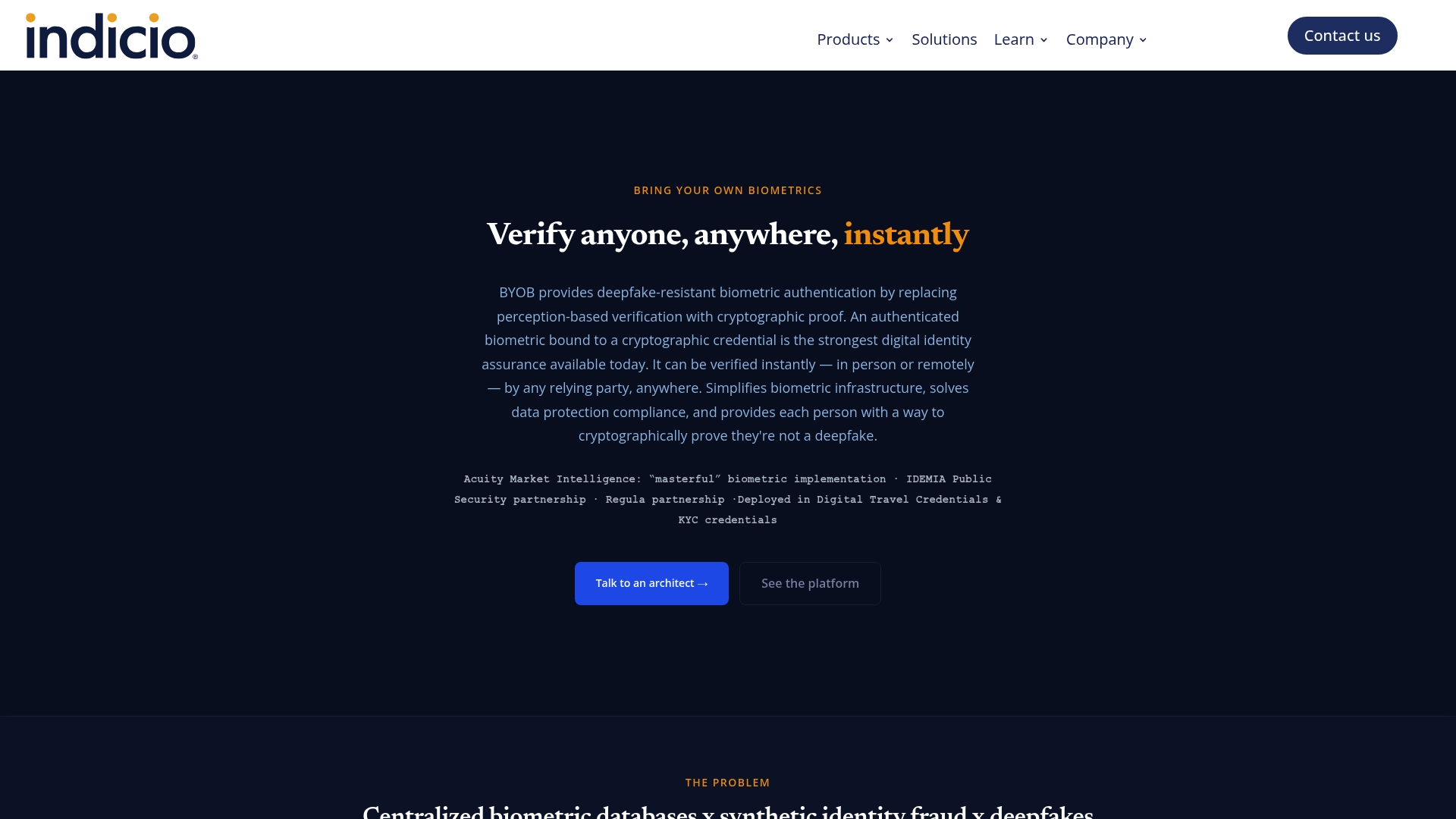
At a Glance
The platform’s Bring Your Own Biometrics (BYOB) approach keeps biometric templates on the user device while issuing a cryptographic proof bound to a portable credential. According to Indicio’s marketing materials, the company reports deployments across travel, border management, banking, and government programs.
Core Features
-
Cryptographic proof of biometric data bound to a digital credential, anchored on-device to prevent centralized storage risks.
-
In-person and remote verification flows that support face, fingerprint, iris, and voice modalities for multi-modal deployments.
-
Contactless credential use cases aimed at border crossing and travel, plus APIs and onboarding support for banking and government identity proofing.
-
Eliminates centralized biometric databases to reduce privacy and compliance exposure during verifications.
Key Differentiator
Indicio’s distinguishing mechanism is the on-device cryptographic binding of biometric input to portable credentials so raw biometric data never leaves the device. That design simplifies audit trails for privacy teams and reduces the attack surface compared with systems that centralize templates.
Pros
-
Responsive customer support and an attentive onboarding process make pilot rollouts smoother than typical identity projects.
-
The vendor shows willingness to accommodate custom requests, which helped one implementer adapt biometric modalities for constrained kiosk hardware.
-
Easy setup for standard customer workflows reduces time to first verification for pilot sites.
-
Application intake is well structured; the vendor’s questions help clarify regulatory and operational requirements early in the engagement.
Cons
-
Integration resources are sometimes limited, which can slow complex system hookups when internal vendor staff are unavailable.
-
Organizations with highly customized legacy systems may require additional engineering effort or paid professional services to bridge gaps.
-
Documentation and implementation examples could be expanded to reduce reliance on vendor support during integration.
When It May Not Fit
If your program requires extensive on-premise customization or you have a large, bespoke credentialing backend, Indicio’s present resource mix may lengthen timelines. Organizations expecting turnkey, deep integrations without professional services should budget for additional development effort.
Who It’s For
Agencies and enterprises that need privacy-preserving biometric identity at operational scale: border agencies, travel operators, banks performing remote identity proofing, and government identity programs seeking portable, auditable credential workflows.
Real World Use Case
Indicio’s marketing materials cite Aruba as a deployment example where biometric-authenticated digital travel credentials let travelers cross a checkpoint without physical documents. That implementation highlights how on-device proofs can speed throughput while keeping biometric templates off central servers.
Pricing
Not applicable — informational only. Indicio positions its offerings as engagement-based deployments rather than list-priced SaaS tiers, so procurement typically follows an RFP or contract discussion with the vendor.
Website: https://indicio.tech/biometric-authentication
Comparative Analysis: Solutions for Optical Biometric Authentication
Optical biometric authentication solutions vary significantly in their core features, deployment models, and target applications. Below, we analyze key aspects across Jett Optics, Anonybit, and Indicio to help identify strengths and trade-offs for teams evaluating these platforms.
Encryption Models and Data Decentralization
Jett Optics introduces adaptive gaze tensors (AGTs) coupled with Markov chain cryptography for creating dynamic biometric proofs and resisting spoofing and quantum attacks. In contrast, Anonybit employs a decentralized biometric cloud to distribute identity data, reducing central storage vulnerabilities. While Jett Optics targets advanced cryptographic applications like Web3 and DePIN projects, Anonybit aligns better with compliance-driven sectors, offering capabilities such as GDPR adherence. Buyers prioritizing regulatory alignment may find Anonybit’s decentralized architecture advantageous.
Deployment Scalability and Integration
The subscription tiers of Jett Optics make it especially accessible for developers prototyping applications, as its pricing model allows predictable scaling. Indicio, with its custom solution approach, provides extensive support for in-field identity applications such as border management and large-scale travel use cases but requires longer engagement processes. Jett Optics’ focus on developer accessibility versus Indicio’s custom deployments highlights different approaches depending on the operational context.
Best Fit Scenarios
-
Jett Optics: Best for blockchain-native teams and decentralized infrastructure developers needing advanced gaze-based biometric authentication integrated with on-chain tools.
-
Anonybit: Suited to compliance-focused industries like banking or healthcare that demand multi-modal biometrics centralized in privacy-protective frameworks.
-
Indicio: An option for public agencies and enterprises requiring portable, on-device proofs for identity verification, particularly in regulated or high-throughput environments such as airports.
Our Pick
Jett Optics excels in its application of adaptive gaze tensor technology, enabling novel identity solutions, particularly for Web3 and decentralized ecosystems. However, organizations requiring multi-modal biometrics or decentralized storage against compliance benchmarks may find Anonybit or Indicio preferable. Jett Optics remains the choice for teams leveraging its unique gaze decryption technologies and token staking models for Web3 adoption.
Optical Biometric Authentication Comparison
Evaluate platforms based on their approach to security, integration, and usability.
| Product | Key Differentiator | Best For | Pricing | Limitation |
|---|---|---|---|---|
| Jett Optics | Dynamic gaze tensors with cryptographic integration | Web3 developers building gaze-based systems | Starts at $8.88/month | Requires specialized eye-tracking hardware |
| Anonybit | Decentralized biometric cloud for data segregation | Regulated industries needing secure workflows | Not disclosed | Significant integration complexity for adoption |
| Indicio | On-device biometric data with portable credentials | Agencies requiring privacy-preserving identity | Not applicable | Limited resources for integration and customization |
Secure Your Optical Biometric NFT Authentication with Jett Optics
The article highlights the challenges of protecting NFT authentication against replay attacks and deepfake spoofing by using static biometric identifiers. Jett Optics offers a solution centered on adaptive gaze tensors and Markov chain cryptography that transform biometric input into dynamic cryptographic keys. This advancement prevents fixed credential vulnerabilities while enabling quantum-resistant, on-chain biometric proofs. For projects seeking to verify human attention and secure NFT ownership transparently, Jett Optics blends hardware innovation with blockchain interoperability.
Explore how Jett Optics can enhance your NFT authentication with spatial gaze encryption and proof-of-attention tokens. Visit Jett Optics to discover subscription plans and staking options designed to reduce costs while boosting security. Take control of your decentralized identity verification by integrating truly adaptive biometric proofs that redefine trust in optical authentication.
Frequently Asked Questions
How does Jett Optics’s Agentive Gaze Tensors enhance optical biometric authentication?
Jett Optics uses Agentive Gaze Tensors (AGTs) as spatial encryption that transforms gaze patterns into cryptographic keys. This feature allows for evolving biometric proofs that increase security against spoofing attempts. Developers should consider this approach for projects requiring high assurance in identity verification.
What is the difference between Jett Optics and Anonybit in terms of biometric data management?
Anonybit excels with its decentralized biometric cloud architecture, aimed at reducing insider risks by splitting biometric data across multiple nodes. Jett Optics, on the other hand, focuses on its adaptive gaze tensor technology, which converts gaze sessions into token rewards, making it particularly suited for on-chain applications. Organizations should evaluate their specific needs around data privacy and functionality when choosing between the two.
Can I use Jett Optics for applications that require post-quantum security?
Jett Optics provides post-quantum authentication that is designed to resist deepfake spoofing and quantum attacks. This capability is crucial for applications needing to secure biometric data against future threats. Teams planning to implement advanced biometric systems should leverage Jett Optics’s security features to enhance trust in their authentication processes.
What are the pricing tiers for Jett Optics, and how can they be reduced?
Jett Optics offers subscription tiers starting at $8.88 per month for the MOJO tier and scaling to $88.88 for the SPACE COWBOY tier. Users can also stake JTX or OPTX tokens to lower their subscription costs or gain lifetime access, which can be appealing for long-term projects.
What integration options does Jett Optics provide for developers?
Jett Optics features hardware and SDKs to support developers in creating gaze-authenticated applications, along with tools for integrating gaze proofs into decentralized processes. This makes it a fitting choice for development teams looking to incorporate biometric protocols into their projects.