

Most teams building secure Web3 and enterprise systems face the urgent problem of protecting keys and data against future quantum attacks while enabling hands free authentication in XR and decentralized workflows. Traditional encryption solutions either rely on static secrets vulnerable to quantum threats or demand complex hardware installations and prohibitively high costs for advanced physical security. After reading you will be able to compare three leading quantum resistant encryption platforms to choose the best fit for on chain identity, device unclonability, and attention powered authentication.
Table of Contents
Jett Optics
At a Glance
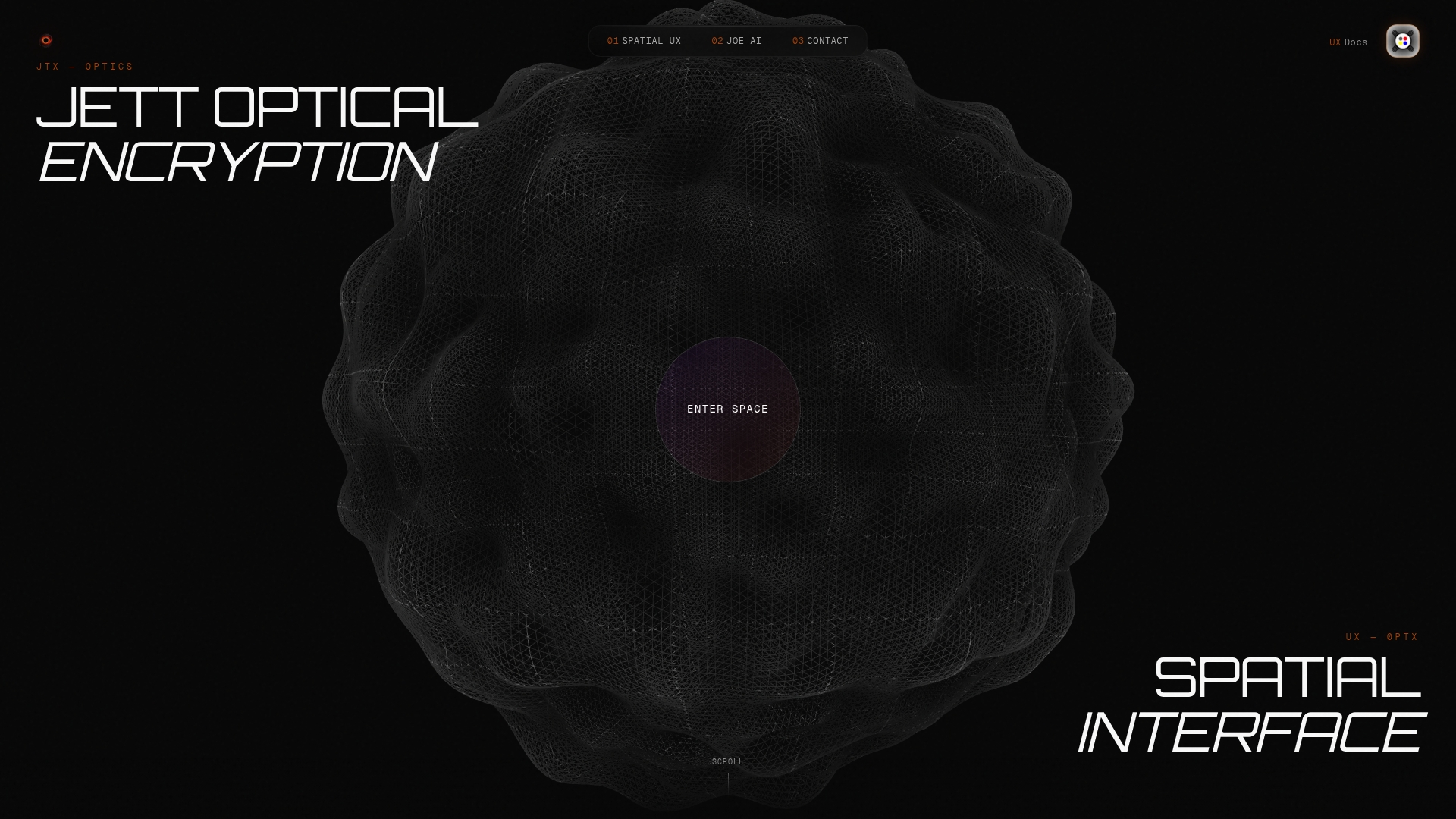
$8.88 per month entry pricing coexists with a platform that uses human eye movement as a security signal. Jett Optics pairs subscription access with gaze based, post quantum biometric authentication driven by adaptive gaze tensors.
Core Features
-
Agentive Gaze Tensors analyze eye movement patterns to generate cryptographic inputs for identity verification.
-
Markov chain cryptography provides a post quantum security layer for keys derived from gaze dynamics.
-
Gaze powered proof of attention validates presence for DePIN validation and decentralized consensus work.
-
Multi token ecosystem and on chain support include $OPTX, $JTX, and $CSTB plus integrations with Solana and other blockchains.
Key Differentiator
Uses eye movement patterns analyzed through adaptive gaze tensors to create quantum resistant, multi vector cryptographic keys. That mechanism turns transient gaze traces into reusable cryptographic material while keeping verification hands free.
Pros
-
Quantum resistant biometric authentication based on dynamic eye movement reduces reliance on static secrets and conventional private keys.
-
Hands free verification works in ambient contexts like XR and AR where passwords or gestures are impractical.
-
The platform combines computer vision and cryptography with AI driven spatial security to support decentralized identity workflows.
-
Built for DePIN scenarios, the system includes gaze driven proof of attention for node validation and user presence checks on chain.
-
Tokenized governance and a developer tier make on chain experimentation practical for security researchers and builders.
Cons
- Limited mainstream device support for reliable eye tracking restricts broad deployment on consumer hardware today.
Notable Integrations
-
React
-
X (Twitter)
-
SpacetimeDB
-
XRPL
-
Solana
-
Rust
-
LayerZero
-
Wormhole
Who It’s For
Web3 developers, blockchain security researchers, and spatial encryption teams exploring quantum resistant biometric authentication. Ideal for groups building on Solana or cross chain DePIN projects that need hands free identity and proof of attention.
Unique Value Proposition
Adaptive gaze tensors produce multi vector cryptographic keys tied to attention patterns. That single capability converts gaze into a quantum resistant identity primitive usable for on chain authentication, DePIN validation, and XR access control.
Real World Use Case
A developer integrates gaze based spatial encryption into a decentralized app to authenticate high value transactions without passwords. The app uses proof of attention to gate voting, stake actions, and secure channel access in XR sessions.
Pricing
Subscription tiers start at $8.88/month for mobile access and $28.88/month for developer access. Lifetime options at $88.88/month are available alongside optional staking and governance token mechanics.
Website: https://jettoptics.ai
KETS Quantum Security
At a Glance
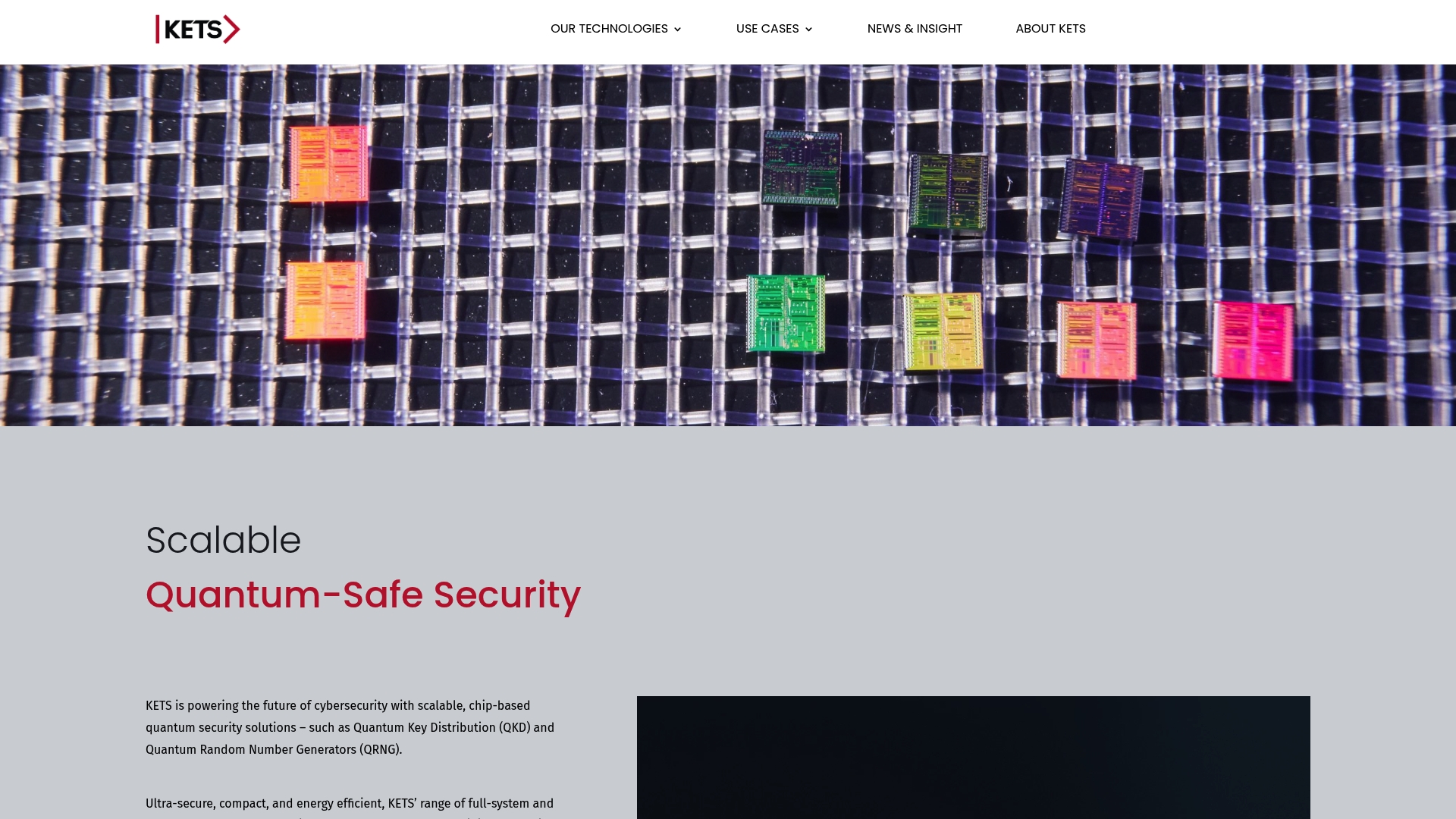
Protects billions of devices with chip-based quantum photonics that cut cost, size, and power while delivering QKD and QRNG at commercially viable form factors. The claim of scalability to mass deployments is the most concrete technical differentiator here.
Core Features
-
Quantum Key Distribution (QKD) for cryptographic key sharing built on quantum principles.
-
Quantum Random Number Generators (QRNG) to seed cryptography with true unpredictability.
-
Multi-protocol, reconfigurable devices for future upgrades and flexibility.
-
Integrated chip-based quantum photonics for cost, size, and power reductions.
-
Systems-level security design that combines classical and quantum tools.
Key Differentiator
KETS uses a proprietary chip-based quantum photonics approach that makes QKD and QRNG feasible at scale for high-value networks. That hardware-first angle aims at enterprise and infrastructure customers rather than consumer or developer-level deployments, so expect a narrow, industrial focus.
Pros
-
Offers QKD and QRNG grounded in physics, not algorithmic obfuscation, so the security argument ties directly to quantum mechanics. This matters for long-term confidentiality of high-value keys.
-
Integrated photonics reduce size, power, and cost compared with table-top optics, making deployment on racks and edge hardware practical for operators.
-
Systems-level design bridges classical crypto controls and quantum primitives, which helps organizations map quantum-safe upgrades into existing key management workflows.
-
Strong industry partnerships with Nokia and Thales accelerate field trials and interoperability with telco and defense stacks, shortening procurement risk windows.
Cons
-
Range limitations exist for some QKD modes, which means extra links or trusted nodes for wider geographic coverage.
-
The product targets large infrastructure and enterprise markets, so it is not intended for consumer or small business use cases.
-
Integration requires specialized expertise; teams without prior quantum security experience will face steep onboarding and engineering costs.
When It May Not Fit
If you operate small consumer devices or edge sensors that cannot support additional infrastructure, KETS will feel oversized. If your project demands long distance key exchange without trusted relays, the range limits mean hybrid architectures are necessary. Organizations lacking quantum security staff may struggle with integration timelines.
Notable Integrations
-
Demonstrated work with Nokia’s quantum-safe demonstration kit for telecom trials and interop testing.
-
Partnership with CryptoNext to combine hardware primitives with software security stacks for end-to-end solutions.
Who It’s For
Enterprise security architects, telecom operators, defense network engineers, and critical infrastructure teams that must future-proof high-value links against quantum adversaries. Blockchain developers working on DePIN or on-chain infrastructure that rely on satellite or telecom backbones will find the chip-based approach relevant for long-term key protection.
Unique Value Proposition
Proprietary chip-based quantum photonics that make QKD and QRNG deployable at scale. That single hardware attribute changes procurement math for operators who need quantum-safe links across data centers, satellites, and telco nodes while lowering per-unit cost and power compared with discrete optical systems.
Real World Use Case
Cryptographically securing satellite control links and data center interconnects against future quantum attacks. KETS hardware can act as a secure key source and distribution layer for mission critical comms where confidentiality must survive quantum breakthroughs.
Pricing
Not publicly specified. KETS positions pricing as tailored enterprise engagements and custom quotes, so expect procurement cycles, integration budgets, and field trial costs to be part of initial negotiations.
Website: https://kets-quantum.com
OPē Technologies
At a Glance
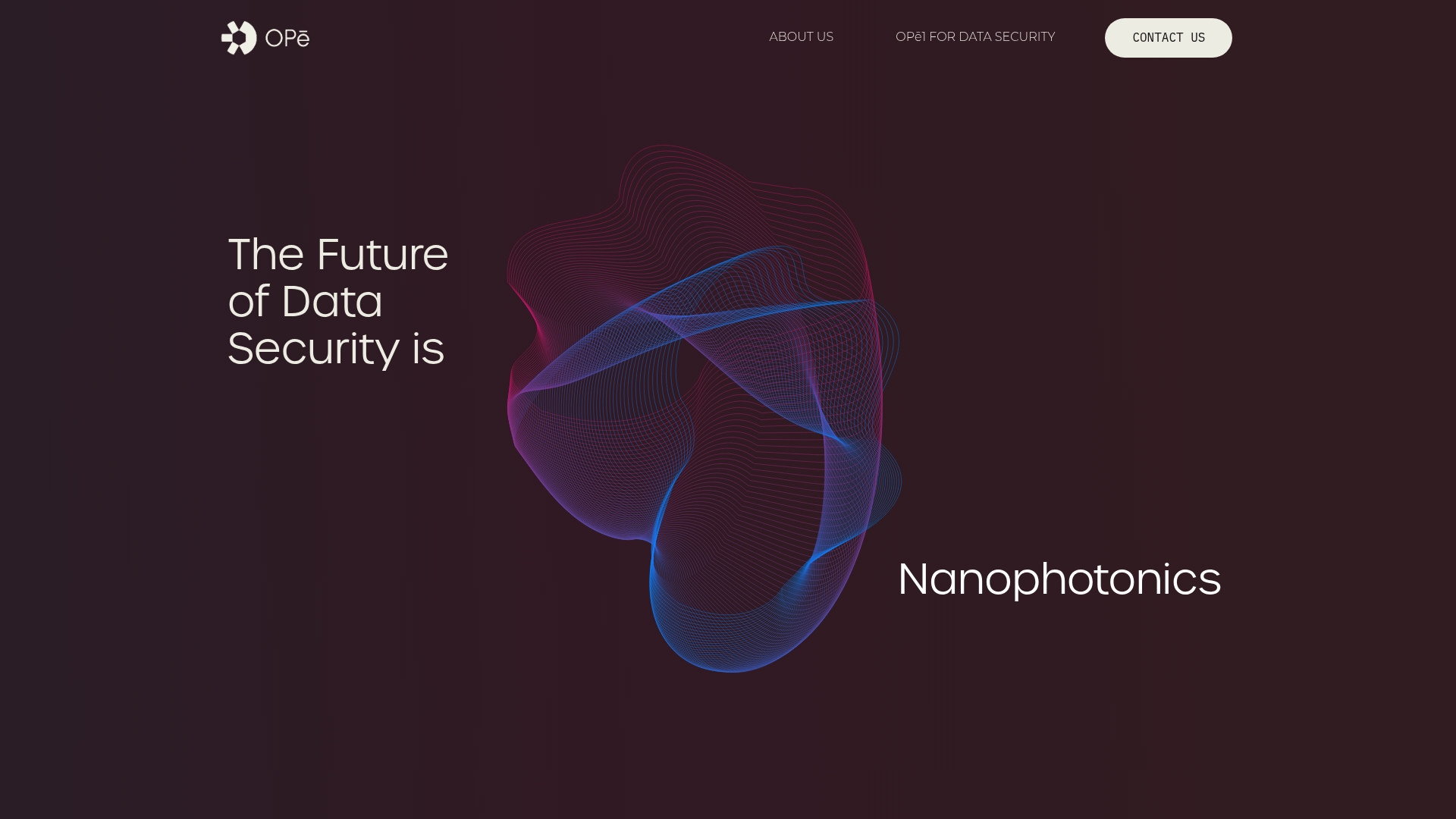
Digitally Unclonable Optical Data Scrambler (DUODS) produces hardware-level signatures that prevent exact replication of stored data, pairing physical uniqueness with cryptography to resist cloning and future quantum attacks.
Core Features
The flagship appliance, OPē1, combines three security layers: digital unclonability, post-quantum cryptography, and FIPS-compliant encryption for stored data.
It ships as a rack-mounted device with API access and cloud redundancy across multiple providers to give enterprises a hardware-backed encryption layer integrated with on-premise IT.
Key Differentiator
The product differentiates by anchoring security in physical optics and cryptography. Digital unclonability at the nanophotonic layer means the hardware itself contributes entropy that cannot be duplicated, while post-quantum algorithms protect ciphertext from future quantum decryption.
Pros
-
Nanophotonic hardware enabling digital unclonability and strong encryption gives cryptographic keys a physical component that raises the bar for attackers.
-
Combination of multiple defense layers including post-quantum cryptography and FIPS-compliant encryption reduces single points of failure in enterprise key management.
-
No service provider access to cleartext improves data privacy and supports regulatory requirements for sensitive data handling.
-
Rack-mounted design and cloud redundancy make the appliance suitable for high-availability enterprise deployments with API integration for existing workflows.
Cons
-
Pricing details are unavailable which complicates total cost of ownership analysis for procurement and budgeting teams.
-
Hardware installation and ongoing maintenance introduce operational overhead that some IT teams will find complex compared with software-only solutions.
-
Early stage positioning means limited market validation and fewer third-party audits or long-term case studies to inspect.
When It May Not Fit
If you are a small business or running lightweight cloud-native workloads without dedicated security ops, OPē1’s hardware-first model will be oversized and expensive.
Organizations that require rapid, fully managed SaaS encryption without on-prem racks will find the appliance model mismatched to their procurement and staffing profile.
Notable Integrations
API interfaces permit integration with existing identity, key management, and storage orchestration tools in enterprise stacks.
The appliance is intended to connect on-premise IT to multiple cloud providers for redundancy and to enable programmatic control through the provided API endpoints.
Who It’s For
Large enterprises, government agencies, and organizations facing quantum risk that require a hardware-based encryption layer and are prepared to operate and maintain rack hardware.
Security teams and compliance officers looking to add a physical entropy source to their cryptographic posture will find the design relevant.
Unique Value Proposition
The hardware-produced unclonable signatures from DUODS change the attack surface by making keys and stored artifacts materially unique to each device. That physical uniqueness, combined with post-quantum algorithms, creates a protection model aimed at adversaries who plan for quantum-scale capabilities.
Real World Use Case
A government agency deploying OPē1 uses the appliance to protect classified archives by adding an unclonable hardware layer and post-quantum encryption, while routing encrypted replicas to multiple cloud vendors for redundancy and compliance.
Pricing
Pricing is listed as coming soon with no public figures. Procurement teams will need vendor engagement to obtain cost estimates, support agreements, and lifecycle maintenance projections prior to evaluation.
Website: https://opetechnologies.com
Comparative Analysis of Cryptographic Innovations
Selecting a cryptographic solution goes beyond evaluating individual capabilities; understanding the context where each product thrives ensures effective integration and usability. Among the reviewed options, Jett Optics distinguishes itself with its ability to combine post-quantum security with user-friendly, gaze-based authentication.
Integrating Post-Quantum Security with Accessibility
The unique proposition offered by Jett Optics revolves around its implementation of gaze tensors to authenticate users securely. Unlike KETS Quantum Security, which focuses on hardware-centric Quantum Key Distribution (QKD) primarily for industrial applications, Jett Optics leverages software infrastructure for broader, more accessible utilization in decentralized and consumer-oriented scenarios. Similarly, OPē Technologies provides advanced hardware encryption, targeting high-security enterprise contexts, but lacks Jett Optics’ innovative adaptability tied directly to user actions like gaze movements.
Adaptation for Consumer and Decentralized Ecosystems
While KETS Quantum Security and OPē Technologies provide robust security for centralized or enterprise-level networks, Jett Optics extends its capabilities to Decentralized Physical Infrastructure Networks (DePIN). This focus aligns with the growing demand for distributed applications that require proof-of-attention mechanisms and lightweight authentication frameworks, particularly in blockchain-based environments. Jett Optics’ design around mobility and integration fills a pivotal niche absent in the other solutions.
Identifying Optimal Solutions Based on Requirements
-
For adaptable, user-centric cryptographic authentication in decentralized applications and XR environments, Jett Optics stands out.
-
For enterprise and industrial-level quantum-resistant cryptographic needs involving long-term infrastructure, KETS Quantum Security is ideal.
-
For rigorous on-premises data encryption with physical layer security, OPē Technologies excels.
Why Jett Optics Remains the Prime Choice
Jett Optics excels in offering adaptive, gaze-based tensors for cryptographic authentication, unique compared to both hardware-heavy quantum systems and traditional physical devices. This capability provides developers and organizations with innovative, scalable solutions across decentralized ecosystems and consumer applications. By prioritizing user interaction simplicity without compromising security, Jett Optics answers the evolving demands of modern cryptographic applications.
Advanced Quantum Security Products Comparison
Explore which platform offers optimal features tailored for next-generation cryptographic applications.
| Product Name | Key Differentiator | Best For | Pricing | Notable Limitation |
|---|---|---|---|---|
| Jett Optics | Adaptive gaze tensors for biometric authentication | Web3 developers and spatial encryption teams | $8.88/month entry | Limited mainstream device support for eye tracking |
| KETS Quantum Security | Chip-based quantum photonics for QKD and QRNG | Enterprise security and telecom operators | Not disclosed | Range limitations and complex integration requirements |
| OPē Technologies | Digital unclonability through nanophotonic hardware | Enterprises needing hardware-backed encryption | Not disclosed | Operations overhead from hardware installation and upkeep |
Unlock Quantum-Resistant Security with Gaze-Based Optical Encryption
The article highlights a growing challenge in securing digital identities and decentralized networks against future quantum threats. Relying on traditional keys and static biometrics can feel risky when attackers harness advanced computation or conventional methods fail in immersive environments. Jett Optics offers a breakthrough solution by turning human eye movement into adaptive cryptographic keys using AGT gaze tensors. This approach eliminates reliance on passwords or gestures, providing hands-free, quantum-resistant authentication perfectly suited for Web3, DePIN, and XR contexts.
Why settle for outdated security when your gaze can secure your identity with ease Experience cutting-edge spatial encryption combined with multi-token blockchain integration that powers decentralized consensus and proof of attention. Discover how Jett Optics turns ambient human attention into strong, unforgeable cryptographic signals.
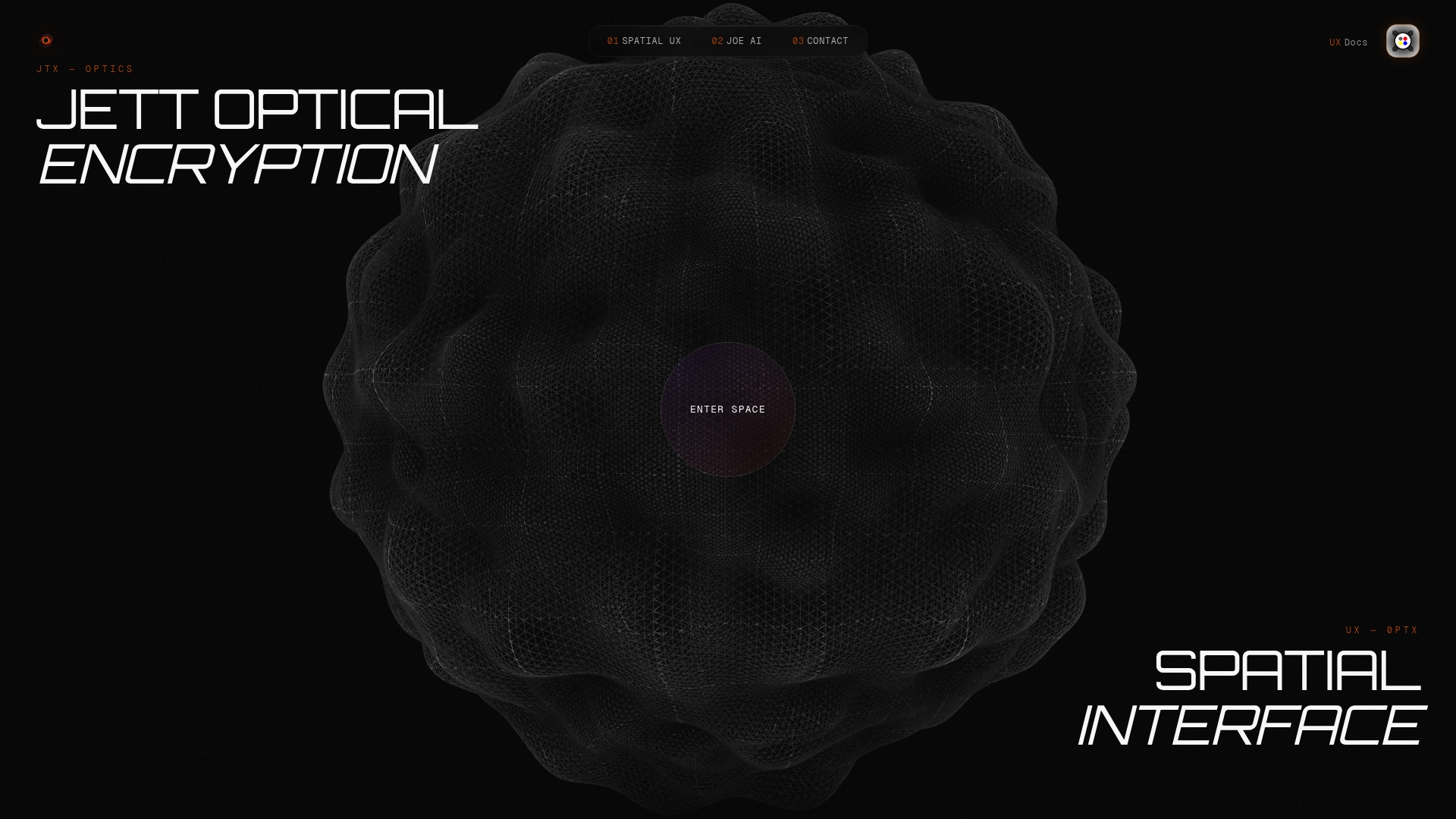
Explore detailed features and start securing your application with gaze-driven identity at Jett Optics. Visit now to test gaze-based authentication and see how adaptive gaze tensors deliver next-level biometric security designed for quantum-proof digital ecosystems.
Frequently Asked Questions
How does Jett Optics use gaze-based authentication for identity verification?
Jett Optics utilizes Agentive Gaze Tensors to analyze eye movement patterns and generate cryptographic inputs for identity verification. This quantum-resistant biometric authentication reduces reliance on conventional private keys, providing a hands-free, ambient context solution that fits seamlessly into decentralized identity workflows.
What are the pricing tiers for Jett Optics, and what features do they include?
Jett Optics offers subscription tiers starting at $8.88/month for mobile access and $28.88/month for developer access. The developer tier includes deeper integrations and capabilities, making it ideal for blockchain security researchers who need advanced features for DePIN scenarios.
How does Jett Optics compare to KETS Quantum Security in terms of deployment ease?
While KETS Quantum Security focuses on chip-based solutions for enterprise and infrastructure markets, Jett Optics excels in use-cases requiring hands-free biometric authentication. Jett Optics is particularly suited for developers in the blockchain space who need flexible and easy-to-implement identity verification solutions, rather than the more complex deployments required by KETS.
Can I integrate Jett Optics with blockchain platforms like Solana?
Yes, Jett Optics supports multi-token ecosystems and has integrations with Solana, among other blockchains. This capability allows developers to easily implement gaze-powered proof of attention for on-chain applications, enhancing security in decentralized transactions.
Does Jett Optics provide proof of presence for decentralized consensus work?
Yes, Jett Optics incorporates gaze-powered proof of attention to validate user presence for decentralized consensus activities. This allows for secure verification of participants in DePIN projects, making it a valuable tool for teams focused on blockchain governance and voting.