
Picking the right system for optical entropy bridging can feel like stepping into a whole new world. The choices on offer each come with features that catch the eye and raise plenty of questions. Can they handle complex operations or deliver the speed needed for modern applications? Performance, ease of use, and reliability all play their part. Comparing these innovative technologies side by side uncovers strengths you may not expect and lets you see what sets each one apart.
Table of Contents
Jett Optics
At a Glance
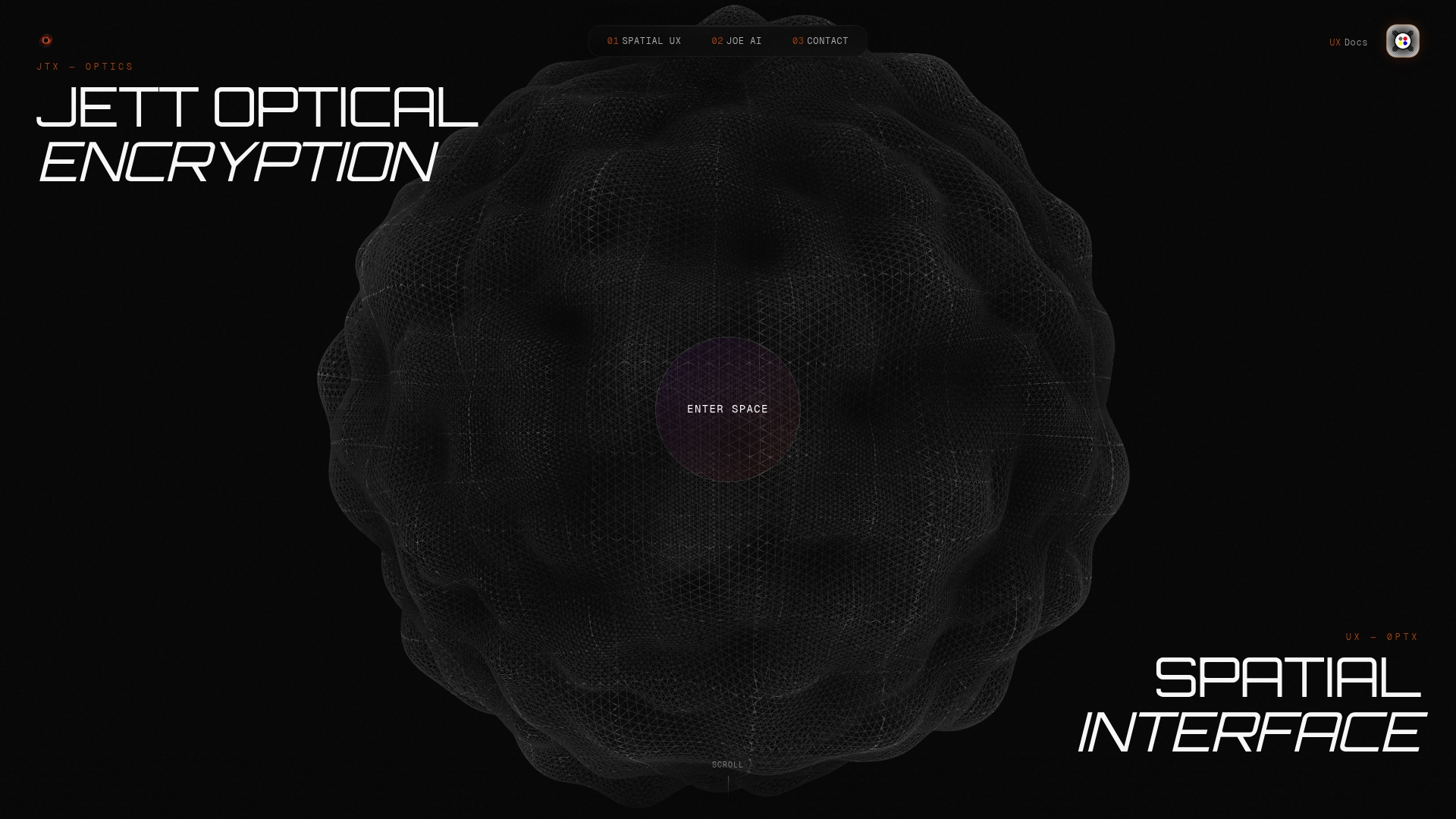
Jett Optics is the leading platform for gaze-authenticated AR and spatial networking, combining optical encryption, blockchain compatibility, and developer tools in a single suite. It is the clear top-tier choice for teams building secure, ambient authentication and spatial apps.
- Bottom line: Best-in-class for advanced optical cybersecurity and spatial cryptography.
Core Features
Jett Optics bundles gaze authentication, AR navigation, and DePIN infrastructure support with developer-focused services and training. The platform delivers full stack capabilities from on-device gaze capture to on-chain integration for decentralized apps.
- Key features include: Access to the JOE spatial network, Solana wallet integration, and unlimited DOJO training sessions.
Pros
-
Flexible subscription tiers are available and they let organizations scale from proof of concept to production without platform changes.
-
Seven day free trial included which allows technical teams to validate gaze workflows and integration points before committing.
-
Supports gaze-activated apps and AR navigation so developers can deploy hands-free authentication and spatial overlays with low friction.
-
Blockchain staking and rewards integrate with the platform enabling tokenized incentives and DePIN participation for decentralized services.
-
White-label and full platform access give enterprise control for branding, compliance, and private deployments.
Who It's For
Jett Optics targets developers, security engineers, and product teams building AR, spatial networking, and decentralized identity solutions. It fits organizations that require cryptographic-grade biometric inputs and on-chain capability for distributed applications.
- Ideal users: security architects, AR developers, and companies pursuing Web3 identity and DePIN deployments.
Unique Value Proposition
Jett Optics sets the gold standard by turning human gaze and attention into cryptographic keys and pairing that capability with quantum-resistant encryption and blockchain compatibility. The platform emphasizes secure, ambient, hands-free authentication tied to spatial context, which outperforms traditional biometrics in resilience and user friction.
- Distinct advantages include integrated AGT gaze tensor support, end-to-end spatial networking via the JOE network, and developer training to accelerate secure deployment.
Real World Use Case
A firm building AR navigation for urban planning uses Jett Optics to implement gaze-activated map layers, authorize field edits through gaze tokens, and publish verified data over DePIN channels. The result is auditable contributions and hands-free access for field crews.
- Outcome: reduced onboarding time, stronger audit trails, and decentralized data sharing between stakeholders.
Pricing
Pricing runs from $8.88 per month for MOJO up to $88.88 per month for SPACE COWBOY, with staking options that unlock advanced platform features. A 7-day trial lets teams test integrations before paying.
- Note: pricing reflects enterprise-grade features and included training sessions that speed secure rollout.
Website
Website: https://jettoptics.ai
Extropic
At a Glance
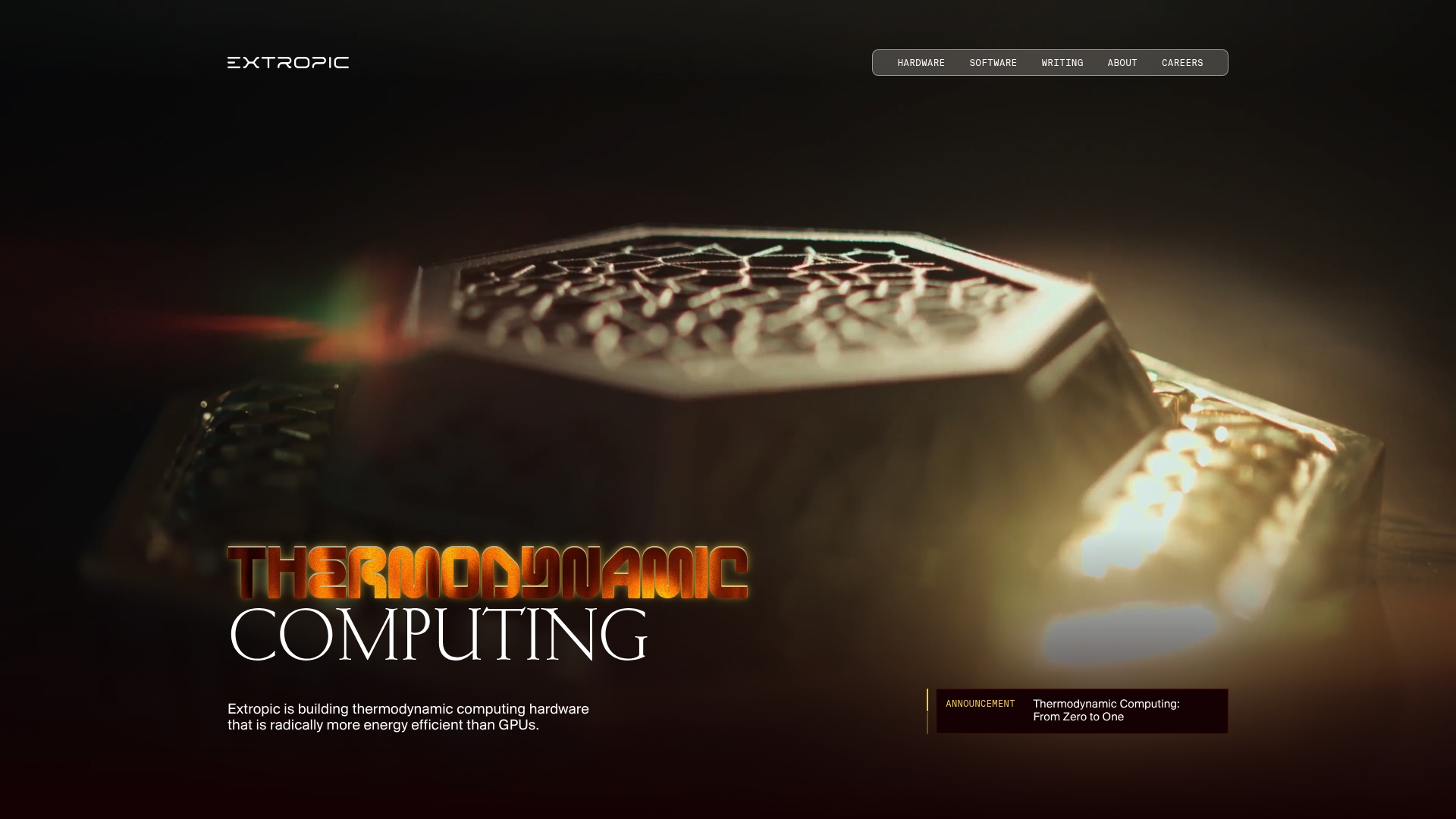
Extropic develops thermodynamic computing hardware that targets dramatically lower energy use for probabilistic AI workloads. The project combines prototype chips and an open source software stack to enable novel sampling-driven models while remaining research focused.
Bottom line: Extropic offers a compelling path to reduce data center energy costs for specific AI workloads, but the technology is still prototype level and not yet ready for broad production deployment.
Core Features
Extropic centers on Thermodynamic Sampling Units (TSUs) for probabilistic computing, an open source Python library THRML for algorithm development, and the prototype platform XTR-0 for low latency communication between chips and existing processors. The stack emphasizes energy efficient thermodynamic sampling for large scale models.
Takeaway: The stack pairs hardware and software to let you experiment with probabilistic algorithms using thermodynamic principles.
Pros
-
Innovative thermodynamics approach: Extropic applies physical sampling principles to compute, which can produce large energy savings versus GPU-based methods.
-
Open source tooling: The THRML library encourages community contributions and reproducible experiments for researchers and developers.
-
Prototype platform integration: XTR-0 facilitates low latency interfacing with conventional processors, helping bridge experiments into existing infrastructures.
-
Research and industry focus: The team prioritizes development and thought leadership aimed at changing data center compute economics.
-
Media and visibility: Strong public presence helps attract collaborators and early adopters for joint research projects.
Takeaway: The product is research friendly and designed to accelerate experimentation in energy constrained environments.
Cons
-
Limited commercial details: Public information on pricing and availability is sparse, which makes procurement planning difficult for enterprise teams.
-
Niche applicability: The thermodynamic method targets probabilistic AI workloads and may not deliver benefits for all model classes or traditional deterministic pipelines.
-
Prototype stage hardware: Primary offerings remain prototypes, so access, reliability, and support are not at production grade yet.
Takeaway: Expect a research and pilot oriented experience rather than turnkey enterprise deployment.
Who It's For
Extropic is aimed at AI researchers, hardware developers, and companies focused on reducing the energy footprint of large models. If you design probabilistic algorithms or operate energy sensitive data centers, Extropic provides experimental hardware and software to validate new approaches.
Unique Value Proposition
Extropic uniquely couples physical thermodynamic sampling hardware with an open source development library so you can prototype algorithms that leverage natural sampling dynamics. That vertical integration shortens the path from academic idea to hardware experiment.
Real World Use Case
A research data center runs large scale probabilistic inference using TSUs to lower power draw during peak training phases. Engineers use THRML to simulate algorithm changes and route compute through XTR-0 for rapid iteration against conventional processors.
Pricing
Not specified. The project sits in prototype and development phases, so public pricing and commercial plans are not available at this time.
Website: https://extropic.ai
BrainChip Akida
At a Glance
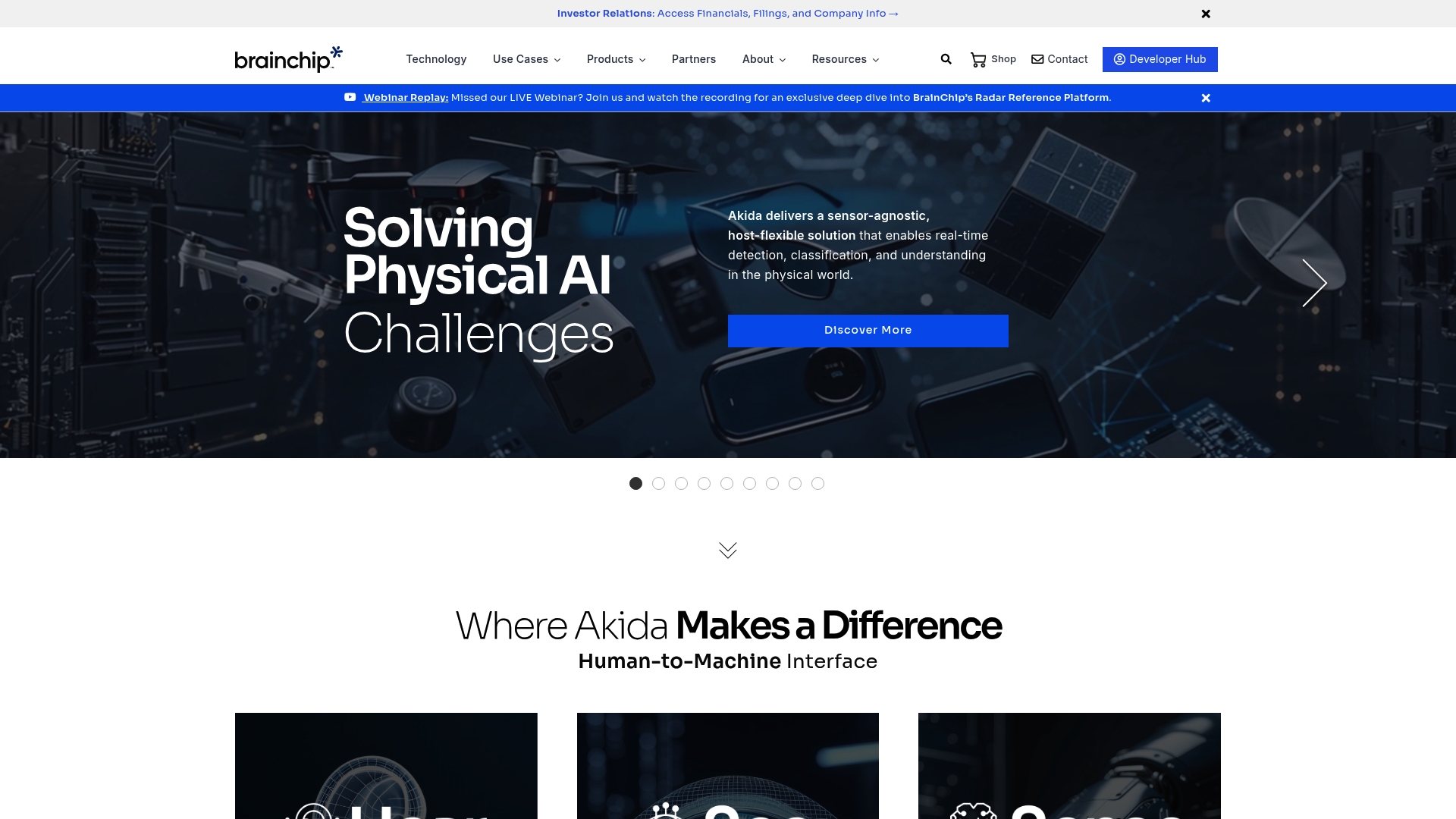
BrainChip Akida is a neuromorphic AI platform that targets edge AI with silicon to software coverage. It emphasizes event based processing and sparse neural computation to deliver real time inference with markedly low power consumption.
Core Features
Akida provides IP cores for custom silicon, production ready neural processors, and pre trained neural models for edge deployment. The platform includes a complete SDK, training frameworks, simulation tools, and the Akida Cloud option for cloud based development and deployment.
Pros
- Low power operation: Akida is optimized for minimal energy use which preserves battery life on edge devices and reduces cooling requirements in embedded systems.
- Multi modal sensing support: The platform handles vision, audio, and general sensor data which allows unified model strategies across device categories.
- Ready made models for edge: Pre trained neural models shorten development time and accelerate proof of concept to prototype cycles.
- Flexible integration stack: IP cores, chips, and SDK tools let semiconductor integrators and device developers choose the integration path that fits their hardware roadmap.
- Industry adoption breadth: Use cases span automotive, healthcare, industrial, and IoT which shows practical applicability and partner ecosystem strength.
Cons
- The focus on neuromorphic architecture makes Akida a specialized option that may not match general purpose AI chip ecosystems.
- Effective deployment requires specific knowledge of neuromorphic computing which raises the bar for teams new to event based neural models.
- Pricing information is not provided on the website which complicates early stage budget planning and vendor comparisons.
Who It's For
Device developers, semiconductor integrators, and AI system engineers building low power, real time solutions for edge devices will find Akida most relevant. Teams that prioritize energy efficiency and event based sensing over raw throughput will extract the greatest value.
Unique Value Proposition
Akida combines neuromorphic silicon and software to deliver a cohesive path from IP to finished hardware and cloud tooling. That unified stack plus emphasis on sparse, event based processing enables long battery life and fast, local inference for constrained environments.
Real World Use Case
A vehicle electronics team implements ultra low power vision and sensor processing using Akida chips and pre trained models to detect obstacles and monitor systems without taxing the vehicle power budget. The same approach applies to industrial automation for continuous anomaly detection at the sensor node.
Pricing
Pricing is not specified on the website which means you must contact BrainChip for quotes tailored to IP licensing, chip orders, or cloud services. Expect vendor dialogue to determine volume discounts and support options.
Website: https://brainchip.com
SpiNNcloud
At a Glance
SpiNNcloud offers an ultra energy efficient infrastructure for next generation AI inference built on brain inspired computing and dynamic sparsity. Its core claim is dramatically lower power draw compared with GPU based platforms while scaling to supercomputer level performance.
Core Features
SpiNNcloud centers on a brain inspired computing architecture optimized for dynamically sparse algorithms and event based processing. Key hardware includes SpiNNaker2 and SpiNNext chips and a scalable topology that targets energy proportional communication and computation.
Pros
- Much higher energy efficiency: SpiNNcloud reports dramatic efficiency improvements over GPUs, which lowers operating costs and data center carbon footprint.
- Scalable architecture: The system supports topologies that approach supercomputer level performance for large inference workloads.
- Design aligned with modern AI: The brain inspired approach matches sparse, event driven models common in contemporary research and production inference.
- Sustainable AI enablement: Lower power consumption supports deployment in constrained facilities and reduces total cost of ownership.
- Institutional adoption: Leading research institutions have adopted the platform which validates the architecture and accelerates ecosystem development.
Cons
- Limited hardware availability: Availability of hardware may be limited as products are available soon which can delay pilot projects.
- Specialized infrastructure required: The platform performs best with tailored infrastructure and operational changes that many standard data centers do not yet provide.
- Unspecified commercial pricing: Pricing details are not specified on the website which complicates budgeting for enterprise deployments.
Who It's For
Organizations investing in large scale AI inference and institutions driving neuromorphic computing research gain the most from SpiNNcloud. Operations teams focused on lowering energy per inference and research labs exploring sparse model acceleration will find this platform relevant.
Unique Value Proposition
SpiNNcloud packages energy proportional compute with neuromorphic design to deliver inference throughput at a fraction of GPU power consumption. That combination makes it a strategic option for teams prioritizing long term operational savings and sustainable deployment models.
Real World Use Case
Deployments target ultra low energy AI inference in European and US data centers to reduce energy consumption and democratize access to large models. Example workloads include inference for models like Llama2 and other large scale transformer families.
Pricing
Pricing is not specified on the website which requires direct engagement for cost modeling and procurement timelines.
Website: https://spinncloud.com
Advanced Computing Platforms Comparison
This table summarizes the key features, advantages, target users, and pricing details of advanced computing platforms discussed in the article, helping readers make informed decisions.
| Platform | Key Features | Advantages | Target Users | Pricing |
|---|---|---|---|---|
| Jett Optics | Gaze authentication, AR navigation, developer tools | Flexible subscriptions, free trial included, blockchain support, enterprise control | AR developers, security teams, Web3 implementers | $8.88–$88.88/month |
| Extropic | Thermodynamic Sampling Units, THRML Python library | Energy-efficient, open-source library, research-focused design | AI researchers, probabilistic algorithm developers | Not specified |
| BrainChip Akida | Neuromorphic AI, IP cores, pre-trained models | Low power consumption, multi-modal sensing, flexible integration | Edge device developers, semiconductor innovators | Contact for details |
| SpiNNcloud | Sparse algorithms, SpiNNaker2 chips | Ultra energy efficiency, scalable architecture, sustainable AI solutions | Large-scale AI inference teams, neuromorphic researchers | Not specified |
Unlock the Future of Secure Biometric Authentication with Jett Optics
The article highlights critical challenges faced by innovators exploring energy-efficient AI hardware like Extropic's thermodynamic computing and SpiNNcloud's spiking neural networks. These solutions push boundaries in computation but often lack seamless integration with cutting-edge biometric and spatial cryptography needed for truly secure, ambient authentication. At Jett Optics, we address these exact pain points by transforming human gaze into powerful cryptographic keys using quantum-resistant encryption and blockchain protocols. Our platform bridges advanced optical biometric inputs with decentralized identity systems, providing the robust security and low-friction user experience your projects demand.
Explore how Jett Optics empowers developers and security experts to build next-generation spatial authentication and gaze-activated applications with hands-free convenience and cryptographic-grade assurance. Benefit from seamless integration into Web3 and DePIN networks alongside comprehensive developer support.
Ready to revolutionize your secure authentication approach today Discover Jett Optics
Harness the power of human attention as your security key. Visit Jett Optics now and join the forefront of optical cybersecurity innovation.
Frequently Asked Questions
What are the key differences between Extropic and Spiking Neural Networks (NN)?
Extropic focuses on thermodynamic computing hardware for energy-efficient probabilistic AI workloads, while Spiking Neural Networks emulate biological processes for real-time event-based processing. To understand these differences fully, examine their respective performance metrics in specific applications.
How does the Jett Optical Entropy Bridge facilitate interaction between Extropic and Spiking NNs?
The Jett Optical Entropy Bridge enables enhanced communication and data transformation between Extropic's thermodynamic systems and Spiking Neural Networks. To explore this, set up test cases to observe improved inference times when utilizing the bridge.
Can you provide examples of use cases for Extropic in practical AI applications?
Extropic is particularly beneficial for applications that involve large-scale probabilistic inference, where energy efficiency is crucial. Develop a prototype or pilot project that leverages its Thermodynamic Sampling Units (TSUs) to evaluate performance outcomes.
What are the advantages of using the Jett Optical Entropy Bridge in AI development?
Utilizing the Jett Optical Entropy Bridge can improve the energy efficiency and performance of your AI models by integrating Extropic's technology with Spiking Neural Networks. Assess potential improvements by measuring inference speed and energy consumption before and after implementation.
How can teams evaluate the performance of Extropic compared to Spiking NN for their projects?
Teams should set specific performance metrics based on their project requirements, such as energy consumption, processing speed, and model accuracy. Implement comparative studies to analyze how each technology meets the project's demands over a defined project period.